KEY TAKEAWAYS
- Learn how streaming platforms are commonly used by students
- Understand the importance of awareness of data collection and privacy
- Discover how to build responsible and informed streaming habits
5.22 billion people use social media, and you might be shocked to know that social media increased by 259 million users in the past year. And in these huge numbers, there are a lot of students who actually do not know the essential information to use these platforms, data usage, and streaming.
I still remember the first time I started streaming shows regularly. To be honest, at first, it felt amazing, no ads, full season, everything just a click away. But after a while, I began to notice a few things: my internet got slow, my mobile data finished too fast, and I started getting very specific ads based on what I was watching.
That was the time when I realized that streaming is fun and entertaining, but it comes with some unwanted responsibilities. In this blog, I am going to share what things you as a student should know about data use and streaming.
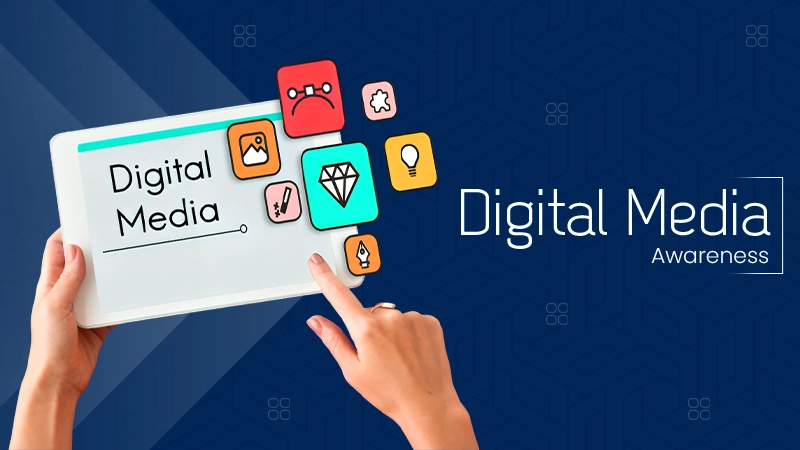
Improving Digital Media Awareness is essential for individuals and businesses to navigate online platforms safely and responsibly.
If I say that in a student’s daily routine, digital media is everywhere, you won’t disagree, right? It starts from the moment they wake up:
- YouTube for a quick explanation before exams
- Music apps to listen to music while studying and travelling
- Streaming platforms like Netflix, Prime, or Disney+ Hotstar to relax
- Educational platforms like Khan Academy, BYJU’S, or similar apps for tough subjects
From my experience, digital media helps students a lot, like:
- It makes difficult topics easier with visuals and animations
- It helps with short videos when we are unable to understand certain topics in class
- They can learn new skills like coding, drawing, or video editing
- And yes, sometimes they can switch off and watch something fun
Although all this is useful and fun, it also comes with some responsibilities, especially around data use and privacy.
When I look at how my friends and I use streaming, I notice some common patterns. Most of us use streaming to:
- Binge-watch shows late at night
- Watch movies, anime, and sports on weekends
- Play music in the background while studying
- Watch exam preparation videos and recorded lectures
Some habits I have seen (and done myself) are like ‘just one more episode,’ and suddenly it’s 2 am, watching everything in HD or FULL HD even when it’s not necessary, and letting videos autoplay without even thinking.
Now I know you might be thinking, ‘well, these habits are normal,’ but in reality, they come with hidden costs like huge data consumption, slow internet for others at home, and less time for sleep, homework, and other activities. That’s when I asked myself how much data does streaming use with other things?
Understanding Data Usage and Internet Limits
At first, I didn’t care much about data. I thought, ‘I have Wi-Fi, so I have unlimited data,’ but then I observed something: even Wi-Fi plans have limits and speed caps after a certain usage. When you stream, you use data from either your mobile data plan (4G/5G) or your home Wi-Fi plan. So, I did some research and got to know roughly how many data streaming uses:
- Music Normal Quality: About 40-70 MB per hour
- Video at 240p–360p (low): About 200-300 MB per hour
- Video at 480p (SD): Around 500-700 MB per hour
- Video at 720p (HD): About 1-1.5 GB per hour
- Video at 1080p (Full HD): Around 1.5-3 GB per hour
The first time I did this math, I literally was shocked. Just a few hours of HD streaming can finish most of a daily data plan. This raised an important question in front of me: How To Reduce Mobile Data For High-Resolution Streaming? And with the Internet’s help got some solutions too.
Awareness of Online Data Collection and Privacy
The other thing that I noticed: after watching certain types of content, my ads recommended videos are changing. Like when I watched a few fitness videos, I started getting more fitness wear ads and protein shakes. And the other time, I searched for a mobile phone once, and later saw mobile ads everywhere.
This made me realize that streaming apps are collecting data about me. This generally collects:
- Basic details like name, age, email, and location
- What I watch, like, share, comment on, and search for
- What device I use and at what time I am online.
They often use this data to show personalized recommendations, serve targeted ads, improve their app, and understand user behavior.
After knowing how important privacy is and how my silly mistakes can harm it, I started to be more responsible towards my privacy. I started with simple things like:
- Checking app permissions
- Using strong passwords and not sharing them with others
- Logging out from accounts on shared or public devices.
Also, I check privacy settings and turn off unnecessary tracking when possible.
As someone who loves streaming, I was not ready to leave it because of the issues I just mentioned above. So I didn’t stop streaming; instead, I changed the way I used to do it.
- Managing Time: I try to finish my studies first, limit screen time on weekends, and take the help of a screen time reminder.
- Controlling Data: I watch shows at 360p or 480p on mobile data, download videos and songs on Wi-Fi, and turn off autoplay.
- Protecting Privacy: I didn’t stay logged in on shared or public devices, avoid random ad links, and check privacy and security settings sometimes.
- Choosing Better Content: I mix entertainment and learning, follow channels that teach useful things, and use streaming to learn too, not just for fun.
Trust me, if you are a student, you should write down or save these things because they will definitely be going to help you if you love streaming. With the help of this, you will be able to save the data that you were unknowingly wasting.
Ans: It gives students access to a large amount of information, helping them to do
research and get information about diverse topics.
Ans: It depends on the metrics, but it is the largest by the user base, while
Netflix leads in paid subscriptions.
Ans: It’s because they give greater convenience, control, and a huge variety of
content.
Ans: Many popular streaming platforms give student discounts, including Hulu, Amazon
Prime, Apple Music, Paramount+, Peacock, Max, YouTube Premium, and Spotify.