
Nurses are the backbone of our healthcare system. And that backbone is under immense strain as very little new blood is coming in, while many are on the verge of their retirement.
The current nurse workforce is already less than required. Approximately 4.7 million nurses would be needed to just maintain the numbers, and if we aim to alleviate the shortage, almost 10.7 million nurses will be needed by 2030.
Clearly, the traditional systems are faltering. Healthcare organizations need to change their tactics to maintain a sufficient nurse workforce. Not just recruitment, they have to focus on offering career growth, nurturing clinical nurse leaders, and cultivating a welcoming environment.
In this article, I’ll discuss the seven pillars that can help healthcare organizations develop and retain their nursing talent. The following sections focus on recruitment, training, career growth, mentorship, work-life balance, and compensation.
KEY TAKEAWAYS
- The global nursing staff is already below required levels and continues to shrink.
- Healthcare needs to make drastic changes to address the widening nursing staff shortage.
- They have to overhaul systems around recruitment, training, career growth, work-life balance, and compensation.
Proactive Talent Acquisition – Casting a Wide Net
First, healthcare organizations will need to get the talent.
Value‑Based Recruiting
Top talent looks for more than a paycheck; they seek purpose, learning opportunities, and supportive leadership. Organizations that explicitly articulate their mission, patient‑outcome metrics, and commitment to professional growth attract nurses who already align with those values.
Partnerships with Academic Institutions
Nursing curriculum developers need to create pipeline programs with nursing schools involving:
- Clinical immersion rotations
- Scholarship tracks
- Joint research projects
This will let hospitals spot high‑potential candidates early. The University of Texas MD Anderson Cancer Center, for example, runs a “Future Oncology Nurse” fellowship that guarantees a full‑time position upon graduation.
Structured Orientation – From Rookie to Ready
As a kid learns harder concepts with each class over time, there has to be a tiered orientation as well.
| Phase | Duration | Focus |
| Foundational | 1–2 weeks | Hospital policies, EMR basics, safety |
| Clinical Immersion | 4–6 weeks | Unit‑specific skills, shadowing expert nurses |
| Competency Validation | 2 weeks | Skills checklists, patient‑scenario simulations |
| Integration | Ongoing for 3 months | Mentorship, feedback loops, care‑team introductions |
The Cleveland Clinic tracks orientation success through a “First‑90‑Day Competency Dashboard,” which correlates early skill mastery with a 32 % reduction in first‑year attrition.
Continuous Education & Specialty Advancement
The medical world is changing rapidly with new research and innovations. This makes it necessary for healthcare personnel to stay educated on these developments.
Tuition Assistance & Credentialing Support
Nurses are more likely to stay when employers pay for certifications, advanced degrees, or specialty training. Student loan repayment services claim their healthcare clients have reduced their turnover rate by 21%-48%.
Mentorship & Peer Coaching
A mentor really helps a newbie to learn at an exponential speed. Mentorship has:
- Formal Matching based on career goals, not just seniority.
- Structured Check‑Ins (monthly 30‑minute sessions).
- Outcome Metrics such as competency scores, promotion rates, and satisfaction surveys.
The Veterans Health Administration pairs every new RN with a “Clinical Coach” for the first 12 months, resulting in a 22 % higher promotion rate to charge nurse versus units without coaching.
Clear Career Pathways – From Bedside to Leadership
Nobody stays in the same place with no growth in sight. Transparent career ladders can retain the nurses.
An ideal nursing career ladder looks like this:
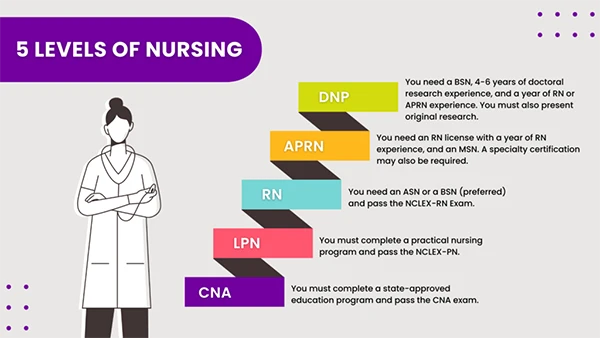
At Intermountain Health, nurses who completed a “Leadership Immersion Program” within two years were 40 % more likely to stay beyond five years, citing the visibility of advancement opportunities as the primary driver.
Work‑Life Integration – The New “Retention Currency”
People value work-life balance more than ever. So, giving your nurses work flexibility, mental-health support, and safer environments is a must-have now.
Flexible Scheduling
Self‑scheduling platforms let nurses trade shifts, set preferred hours, and request days off up to six months in advance. When Johns Hopkins Hospital introduced a mobile scheduling app, voluntary turnover dropped 18 % over 18 months.
Wellness & Resilience Programs
Staff can process stress better with:
- On‑site mindfulness rooms
- Free counseling
- “Debrief” huddles after critical events
A pilot at Northwell Health demonstrated a 12 % reduction in sick‑leave usage after launching a 24/7 employee assistance line.
Competitive Compensation & Recognition
People crave recognition, either through compensation or rewards.
Pay-for-Performance
Linking a portion of base salary to quality metrics (e.g., sepsis bundle compliance, patient satisfaction scores) rewards expertise while driving institutional goals. The Henry Ford Health System reports a 9 % rise in nurse‑generated quality initiatives after adopting a tiered bonus structure.
Real‑Time Recognition
Recognizing and visibilizing performance is important through:
- Digital “kudos” boards
- Badge awards for innovations
- Quarterly “Nurse of the Quarter” ceremonies
Recognition directly influences psychological safety, fostering an environment where nurses feel comfortable sharing best practices.
Conclusion
Healthcare organizations have to cultivate expert nursing talent before it’s too late. They have to focus on blending purposeful recruitment, robust onboarding, continuous learning, mentorship, clear career pathways, work‑life integration, competitive compensation, and data‑driven management. This will make expert nurses stay longer, mentor the next generation, and drive higher quality care.
By investing now in the eight pillars outlined above, health‑care leaders can ensure that their nursing teams not only survive the talent crunch but thrive as the innovators and compassionate caregivers of tomorrow.
FAQs
The 3 Rs of employee retention are: Respect, Recognition, and Reward.
Healthcare organizations need to adopt value-based recruitment, even partner up with academic institutions for talent acquisition.
Mentorship makes the intern learn at an exponential speed compared to non-mentored training.