Introduction
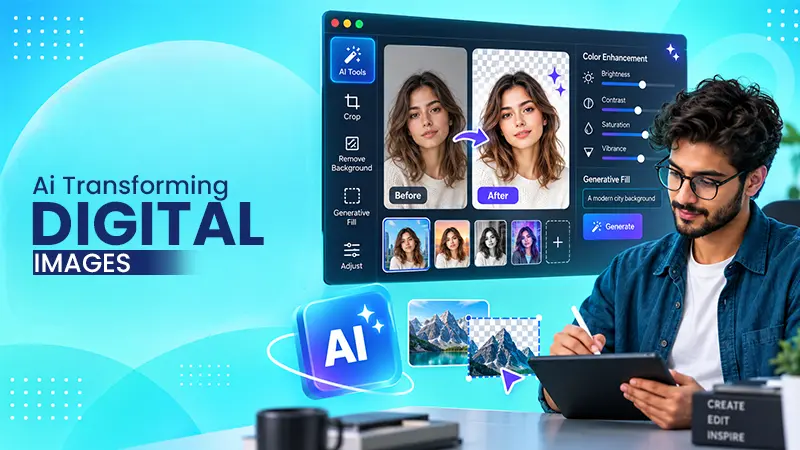
Creating digital images once required advanced design skills, specialized software, and considerable time. Today, artificial intelligence is changing that process by making image creation more accessible to a much wider audience. From generating original illustrations to improving existing photographs, modern AI tools can assist with many parts of the visual content process.
This technology is becoming increasingly useful for marketers, designers, educators, content creators, developers, and everyday users. However, understanding how AI generated images work, where they are useful, and what limitations they have is important before incorporating them into a creative workflow.
Understanding AI Based Image Creation
An AI image generator uses machine learning models to create visual content based on instructions provided by a user. These instructions are commonly called prompts. Depending on the system, a prompt can describe a subject, environment, artistic style, composition, lighting, colors, or other visual characteristics.
Modern image generation systems are trained using large collections of visual data. During training, the models learn relationships between words, concepts, shapes, colors, and visual patterns. When a user provides a prompt, the system uses what it has learned to produce an image that corresponds to the requested description.
The technology can produce many different types of visual content, including illustrations, conceptual artwork, product scenes, backgrounds, icons, and realistic looking compositions.
One of the main reasons for the growing popularity of AI image technology is accessibility. Traditional digital artwork can require years of experience with tools such as photo editors, illustration software, and 3D applications. AI tools can reduce the technical barrier by allowing users to describe an idea using ordinary language.
Speed is another important factor. Creating a visual concept manually may take hours, particularly when multiple versions are required. AI can produce several variations in a much shorter period, allowing creators to explore different ideas before choosing a direction.
These tools can also support experimentation. A writer working on an article, for example, can visualize different concepts before deciding which one best represents the subject. Similarly, a designer can explore compositions and styles during the early stages of a project.
Common Uses Across Different Industries
AI generated images are being used in a variety of professional and creative environments.
Marketing and Advertising
Marketing teams frequently need visual material for websites, social media, presentations, and campaigns. AI tools can help teams develop initial concepts or create supporting graphics when traditional photography or illustration is not practical.
However, generated images should still be reviewed carefully, particularly when they are used to represent real products, people, or locations.
Education
Teachers and educational content creators can use generated visuals to explain difficult concepts or make learning materials more engaging. A historical illustration, scientific concept, or fictional scenario can be visualized without requiring a professional illustrator for every individual image.
Publishing and Content Creation
Bloggers, publishers, and social media creators often need images that complement written content. AI can help develop original visual concepts that match the subject and tone of an article.
For publishers, maintaining consistency is particularly important. Images should support the information being presented rather than distract readers or create confusion.
Product Development
Businesses can also use AI generated imagery during product development. Designers may create early visual concepts for packaging, furniture, clothing, interfaces, or other products. These images can help communicate an idea before resources are invested in producing a finished version.
The Importance of Writing Effective Prompts
The quality of an AI generated image often depends on how clearly the user communicates the desired result. A short prompt can produce an interesting image, but more detailed instructions can provide greater control.
For example, instead of requesting an image of a city, a user might describe the time of day, architectural style, weather conditions, camera perspective, atmosphere, and intended visual style.
Experimentation is part of the process. A first result may not match the original idea, so users can adjust individual elements rather than completely rewriting the prompt. Changing the subject’s position, lighting, background, or composition can produce significantly different results.
Limitations and Accuracy Concerns
Despite rapid improvements, AI image systems are not perfect. Generated images can contain visual inconsistencies, particularly in complex scenes. Details such as hands, text, small objects, facial features, and intricate patterns may sometimes appear incorrectly.
This means human review remains important. Users should examine generated content before publishing it, especially when an image is being used for professional communication or educational purposes.
AI generated images can also create questions about originality, copyright, and the use of training data. Laws and industry standards continue to develop, and rules can differ between jurisdictions and specific applications. Organizations using AI generated content should therefore consider the relevant legal and platform requirements before publishing it commercially.
AI as a Creative Assistant
AI does not necessarily have to replace traditional creative methods. In many workflows, it can function as an assistant that helps people move from an initial idea to a visual concept more quickly.
A designer might use AI to explore compositions before recreating the selected concept manually. A writer might use generated imagery to visualize an article before commissioning professional artwork. A marketing team might create several early concepts and then use traditional design tools to develop the final material.
This collaborative approach allows people to combine human judgment with machine assisted experimentation.
Choosing the Right Approach
The best method for creating an image depends on the purpose of the project. AI tools can be particularly useful when a concept needs to be explored quickly or when a highly specific visual is difficult to source.
For important commercial work, professional photography, illustration, or conventional design may still be preferable when precise control and predictable results are essential. In other situations, AI can provide an efficient starting point that reduces the time required to develop a concept.
Users should also consider privacy, licensing terms, output ownership, and usage restrictions when selecting an AI image service. Reading the provider’s current terms before using generated content for commercial purposes is a sensible step.
Conclusion
Artificial intelligence is making digital image creation faster, more accessible, and more experimental. An AI image generator can help users turn written ideas into visual concepts, explore creative possibilities, and support workflows across publishing, education, marketing, and design. At the same time, generated images still require human review because questions surrounding accuracy, originality, copyright, and appropriate use remain important.
The most effective approach is to treat AI as a creative tool rather than an automatic replacement for human judgment. When combined with thoughtful prompts, careful editing, and responsible use, AI based image technology can become a valuable part of modern visual content creation.