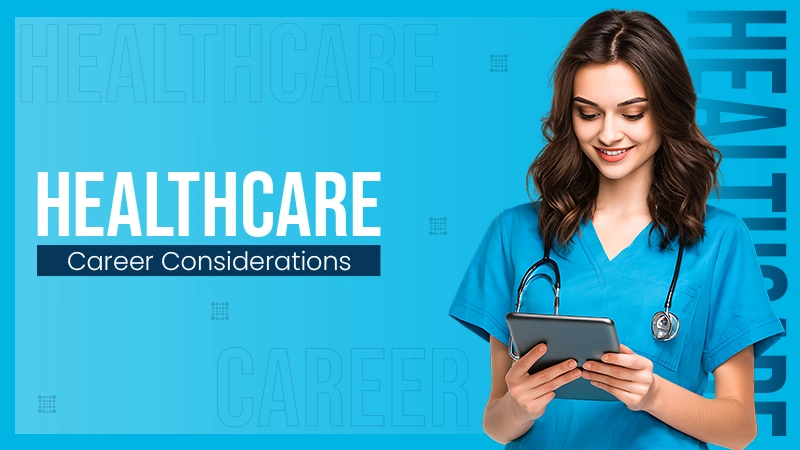
A lot of students become mired in that emotion. One moment they are going over their notes from class, and the next, they are browsing career websites to see what jobs will still be available when they graduate. Healthcare is one industry that consistently appears in these searches.
It’s partly because the field is so vast that anyone who wants to learn something new can usually find a place. It also helps that many students already have some sort of connection to healthcare, whether it be from personal experience, a loved one, or a class they enjoyed.
Anything familiar begins to seem much more appealing in a world where career paths can occasionally feel uncertain. In this blog post, we are going to explore how the field becomes less daunting and more like a realistic place to establish a stable career once students understand the variety of roles that exist within the healthcare industry.

Let’s get started!
Key Takeaways
- Uncovering stable domains in healthcare
- Understanding the impact of technology skills
- Decoding continued roles that are in demand
- Exploring why soft skills matter with expert specialization
Understanding Stable Paths in Healthcare
Some healthcare careers stay steady in a way that feels almost comforting when compared to fields that move in unpredictable cycles. A lot of that stability comes from one pretty basic reality:” Humans always require care. They still need assistance with their medications, they still have checkups, and long-term conditions don’t simply go on hold because of other events in the world.
This is usually the point when students begin looking around at the different paths within healthcare, often before they know exactly what they want. Some lean toward hands-on clinical work, others find themselves drawn to patient support or education roles, and then there are the students who enjoy science enough that they choose pharmacy school because the medication side of care makes sense to them.
Healthcare stays reliable because it deals with real needs that don’t disappear. Someone has to help patients understand a diagnosis. Someone has to guide them through treatment steps. That kind of steady demand is what makes these careers feel meaningful not only now, but years into the future.
Interesting Facts
Healthcare and social assistance are expected to add over 2 million jobs by 2032, representing about 45% of all new jobs.
Technology Skills That Support Long-Term Growth
Healthcare today looks different, even compared to ten or twelve years ago. Screens are everywhere now. Digital charts replaced big paper folders. Video calls are used for quick checkups. And patient portals are something people use without thinking much about it.
The nice part is that students don’t need to be tech experts. A lot of these tools feel familiar already. Scheduling online is similar to scheduling a service visit. A video call with a physician is all that telehealth is. Also, a lot of digital systems function similarly to the apps we use every day. The rest becomes simpler as you master the fundamentals.
Workers who can balance patient interaction with comfort using digital tools often find themselves growing faster in their roles. They become the people others can rely on when the system changes a bit, or when a new update rolls out and everyone is still figuring out what button does what.
Roles That Continue to Be in Demand
Some jobs in healthcare stay essential because the work they involve can’t really pause or be fully automated. Nurses are needed everywhere — hospitals, clinics, schools, long-term care, home health, and places you might not think about until you see them in person. Medical assistants keep clinics organized and help patients navigate small but important daily procedures.
Pharmacists help people understand how to take medicines safely and how to avoid possible side effects. Lab technicians run tests that guide diagnosis, making their work part of the first steps in figuring out what’s going on with a patient. And then there are health informatics roles, which are less visible but make a huge difference by helping turn large amounts of data into clearer information for healthcare providers.
All of these roles rely on human judgment. Technology helps, sure, but it doesn’t replace a person who knows how to evaluate a situation or talk through a patient’s concerns.
Soft Skills Matter Too
Healthcare isn’t just about technical steps or systems. It’s also about people. Patients remember if someone explained something clearly or took a moment to listen. And when things get busy — which happens a lot – strong communication helps teams avoid mistakes and keep everything running smoothly.
Many students build these soft skills without even realizing it. Part-time jobs, taking care of younger siblings, volunteering, and group projects – all of these things teach patience, empathy, and problem-solving. Those skills follow students into healthcare roles, and they become just as important as anything learned in class.
Exploring Specializations Early
There are so many choices in healthcare that it is only natural and very normal to feel unsure about even where to start. One thing that you can do to make the process easier on yourself is to just start exploring things early. You can shadow a professional for a while to see if you can see yourself doing that role, you can watch videos about different roles, or just talk to advisors.
And if you need to change directions, that’s also completely normal. You would be very surprised to know that there are so many people who do that once they actually see what their day-to-day work will look like.
Choosing a future-proof path in healthcare isn’t about predicting every trend. Honestly speaking, it all really comes down to understanding the human needs that have stayed steady throughout our lifetimes and building skills that stay relevant no matter what changes.
If you have a little bit of curiosity, flexibility, and show steady effort, you can easily find a path that grows with you and continues to matter well into the future.
Ans: It includes concepts like Personalized, preventive, predictive, participatory.
Ans: The four core pillars of healthcare are Beneficence, Nonmaleficence, Autonomy, and justice.
Ans: It refers to Advanced clinical practitioners.