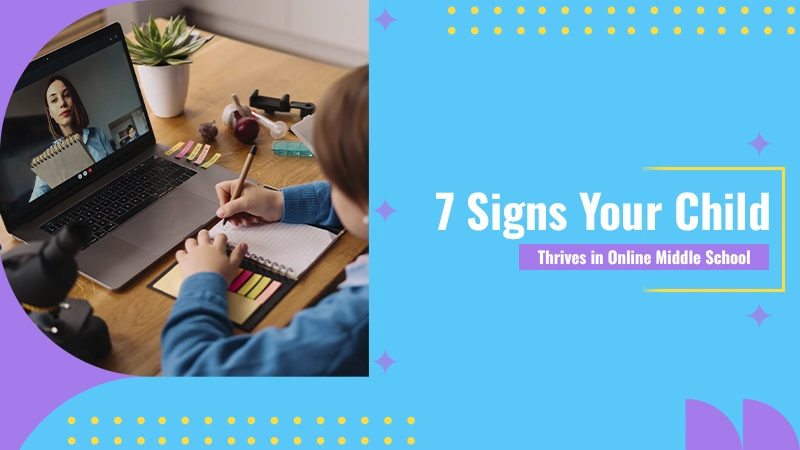
Middle school is one of the most challenging transitions in a young person’s life, and for many families, the traditional classroom is not where their child does their best work.
If you have been noticing signs that your child is struggling to keep up, losing motivation, or simply not fitting into the conventional school mould, it might be time to explore an alternative.
Online middle school has evolved far beyond the basic video lectures and pre-recorded lessons of a decade ago.
Today’s programs offer live one-to-one instruction, flexible scheduling, interactive learning tools, and vibrant social communities, all designed to meet students exactly where they are.
But how do you know if the switch is right for your family? Here are seven clear signs that your child could genuinely thrive in an online learning environment.
1. They Are Bored and Unchallenged in the Classroom
One of the most overlooked reasons students disengage from school is not that the work is too hard, it is that the work is too easy.
Gifted and academically advanced students often spend hours sitting through material they have already mastered, waiting for the rest of the class to catch up.
This chronic under-stimulation can look like laziness or disinterest on the surface, but it is often a sign that the student needs a learning environment that moves at their own pace.
Online programs that offer personalized curricula can accelerate lessons for advanced learners, keeping them intellectually engaged instead of mentally checked out.
The beauty of one-to-one online instruction is that there is no class average to teach to. A teacher working individually with your child can identify exactly where they are and push them forward without artificial limits.
2. Traditional Classrooms Feel Overwhelming
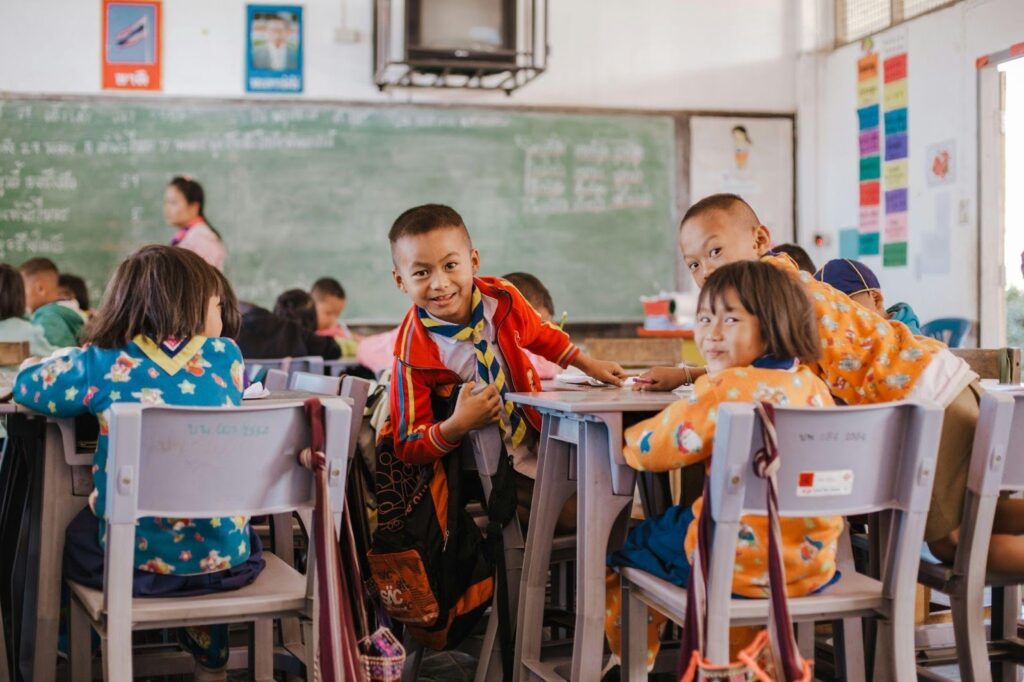
For students who are introverted, highly sensitive, or managing conditions like anxiety, ADHD, or sensory processing differences, the traditional classroom can be a genuinely stressful environment.
The noise, the social pressure, and the rigid structure can consume so much energy that very little is left for actual learning.
An online education removes many of these environmental stressors while preserving the quality of instruction. Students can learn from a quiet, comfortable space where they feel safe, which often leads to dramatic improvements in both focus and academic performance.
This does not mean online school is only for students with diagnosed conditions. Many children simply learn better when they have control over their physical environment, and that preference alone is a valid reason to explore virtual options.
3. Their Schedule Conflicts With Traditional School Hours
Not every middle schooler fits neatly into the 8 AM to 3 PM school day. Student athletes with rigorous training schedules, young performers pursuing careers in the arts, and families who travel frequently all face the challenge of building education around a non-traditional lifestyle.
Flexible online programs allow students to schedule classes at times that work for their lives, sometimes as early as 5:30 AM or as late as 11:30 PM.
This kind of flexibility means your child does not have to choose between their education and their passions.
Some programs even allow students to choose which days of the week they attend classes, making it possible to concentrate learning into two or three intensive days. The remaining time can be devoted to training, rehearsals, travel, or simply recharging.
4. They Learn Better With Individual Attention
In a typical classroom of 25 to 30 students, the amount of individual attention any single child receives is minimal. Some students thrive in that group dynamic, but many others need more direct interaction with their teacher to truly absorb new concepts.
If your child frequently comes home confused about what was taught or hesitant to ask questions in front of peers, a one-to-one learning model could be transformative.
When a teacher is focused solely on your child, they can immediately identify confusion, adjust their approach, and ensure understanding before moving on.
Research supports this as well; students in personalized one-to-one learning environments have been shown to progress academically two to three times faster than their peers in traditional settings.
That kind of acceleration is not about rushing through material, but about eliminating the wasted time that comes from a one-size-fits-all approach.
5. Social Dynamics Are Affecting Their Well-being
Middle school is notoriously difficult socially, and for some students, the social environment becomes so toxic that it actively interferes with learning. Bullying, exclusion, and social anxiety can turn every school day into an emotional ordeal that overshadows everything else.
Removing your child from a harmful social environment does not mean isolating them from peers altogether.
The best online programs offer structured social opportunities through virtual clubs, online homework cafés, gaming groups, community events, and even in-person meetups for students who want a face-to-face connection.
In fact, many families find that online socialization is healthier for their child because it happens on the student’s terms.
Without the pressure cooker of hallways and cafeterias, students can build friendships based on genuine shared interests rather than proximity and social hierarchy.
6. They Need to Catch Up or Get Ahead

Sometimes the timing of a traditional school year simply does not align with a student’s reality.
A child recovering from an illness, dealing with a family move, or transitioning from a school that was not the right fit may find themselves significantly ahead of or behind their grade-level peers.
An online middle school program with open enrollment and personalized pacing allows students to start whenever they are ready, without waiting for a new semester to begin.
Students who need to catch up can focus intensively on areas where they have gaps, while those who are ahead can keep moving without being held back by a fixed calendar.
This flexibility is especially valuable for families going through transitions. Whether you are relocating to a new city, returning from an extended trip, or simply realizing mid-year that your child’s current school is not working, the ability to enrol at any point removes one of the biggest barriers to finding the right educational fit.
7. You Want More Involvement in Their Education
Many parents feel disconnected from what happens during the school day, receiving only occasional report cards and brief parent-teacher conferences as windows into their child’s academic life.
If you want a closer relationship with your child’s education, understanding what they are learning, how they are progressing, and where they need support, online school makes that far more accessible.
In an online environment, learning happens in your home, and many programs are designed to keep parents informed and involved at every stage.
You can observe how your child interacts with their teacher, review their coursework in real time, and collaborate with educators to adjust the plan as needed.
This level of transparency creates a genuine partnership between family and school. Instead of feeling like a passive observer, you become an active participant in shaping your child’s educational journey.
Making the Transition Smoother
If you have recognized your child in several of these signs, the next step is planning a transition that feels natural rather than abrupt.
Start by having an honest conversation with your child about what is and is not working in their current school, and listen carefully to what they tell you.
Explore programs that offer trial periods, hybrid options, or part-time enrolment so your child can ease into online learning without a dramatic overnight change.
Many families find that starting with a single class taken online while remaining enrolled in their traditional school is a low-risk way to test whether the format is a good fit.
It is also worth looking for programs that maintain physical campus locations alongside their online offerings.
Having the option to attend some classes in person or participate in on-campus events gives your child the best of both worlds and provides a safety net during the adjustment period.
What to Look For in an Online Program
Not all online middle schools are created equal, and doing your homework before committing is essential. Accreditation should be non-negotiable it ensures the school meets recognized academic standards and that credits will transfer if your child later moves to another institution.
Beyond accreditation, pay attention to how classes are actually delivered. There is a significant difference between a program where your child watches pre-recorded videos alongside hundreds of other students and one where they receive live, personalized instruction from a dedicated teacher.
Social infrastructure matters just as much as academics. Look for programs that offer virtual clubs, collaborative homework spaces, community events, and mentorship opportunities, the features that transform online school from a solitary experience into a connected community.
Finally, evaluate the flexibility the program truly offers. Can your child start mid-year? Can classes be scheduled around existing commitments?
Is there support for students who need to move at a different pace than the standard curriculum assumes?
The Bigger Picture
Choosing to move your child to an online middle school is not a retreat from education it is a deliberate step toward finding the environment where they can actually flourish.
Every child learns differently, and the bravest thing a parent can do is acknowledge when the conventional path is not serving their child’s needs.
The landscape of online education has matured to the point where students no longer have to sacrifice social connection, academic rigour, or personal growth for the sake of flexibility.
The right program will challenge your child intellectually, support them emotionally, and prepare them for a seamless transition into high school and beyond.
If the signs are there, trust what you are seeing. Your instinct that something needs to change is likely the first step toward unlocking a version of your child’s education that finally feels right.