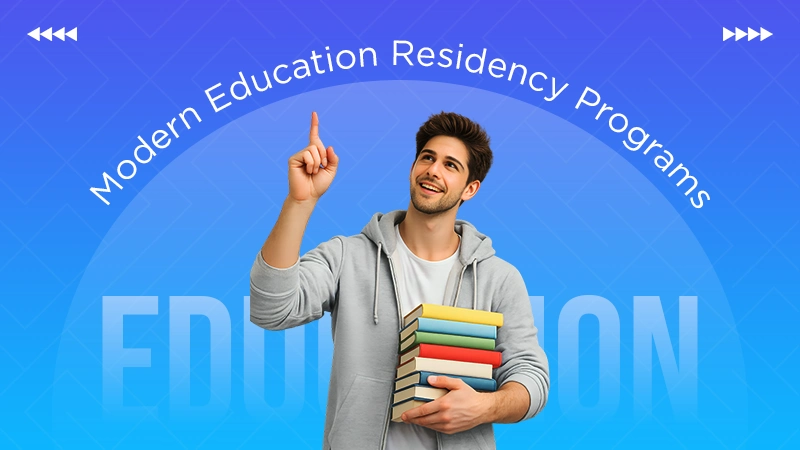
Global Student Mobility has increased to just under 6.9 million as of 2022, with people choosing to approach their academic endeavours outside their country with the assistance and support of education-oriented residency programs
As the demand rises for international exposure and top-quality education, with uncapped career advancement potential, students look to gain the benefits of mobility-aware education.
In this guide, we have outlined all the aspects and benefits that international residency programs provide to students who want to achieve long-term academic success abroad.

Key Takeaways
- Key features of education-oriented residency programs
- How institutions support mobility-aware education
- Latest policy changes that influence mobility education
- Important things to consider to achieve academic success abroad
Defining Global Mobility Within Modern Education Systems
Nowadays, the roots of modern education systems are being built on a strong fundamental which is global mobility.
It has completely transformed the educational landscape as a whole, with aspirants looking to apply for high school or degree programs from foreign countries, and, while doing that, they also look to apply for Portugal Golden Visa as one of the most premium options.
This unprecedented global mobility, seen from countless students, encourages more like-minded individuals to follow suit and get inspired by them.
Why Residency Programs Matter for Academic Continuity
Residency programs like these matter as they present us with once-in-a-lifetime opportunities and benefits, such as :
- Fast Citizenship – The program offers the quickest path to gaining citizenship in the EU. Holders of the golden visa can attain citizenship in just 5 years.
- Freedom To Move – The residents who have a golden visa can work, travel or stay in and around the country for which they hold the golden visa, and have restriction-free travel allowance to other countries.
- Minimum Stay Requirement – Golden visa holders need to only stay in the applied country for a minimum of 7 days in a year, which basically means there is no requirement for a person to reside in one place permanently and can still pursue their career or travel and live in any place of their choosing.
- Excellent Quality of Life – The countries included in the program boast supreme healthcare and education systems. They offer unique and rich cultural lifestyles and technological advancements, all while having a low cost of living.
- International Standards of Education – The educational standards are of the highest quality, with certified professionals guiding the students to build a better future for themselves in the country of their choice.
Structural Features of Education-Linked Residency Options
When a person looking for residency applies through the platform, having a goal of gaining academic excellence and pursuing and gaining more knowledge in their field of study, they are entitled to countless exclusive benefits, such as:
- Real World Experience – Students are not just given theoretical knowledge but are provided with real, practical experience, all while working with experts to guide them in the right direction.
- Integrated Courses – While getting all the experience and knowledge, the person is also eligible to earn a degree or a certification as proof of accomplishment in their chosen field of study.
- Financial Support – The program also offers financial support and compensation to offset living expenses, etc., so that uninterrupted learning can continue without stress.
- Immediate Placement – After the completion of the course or program, candidates are placed in reputed companies and firms, as a result of strong partnerships with them.
Interesting Fact
According to reports, 64% of employers consider international exposure and experience of students more important when looking to hire new prospects.
The Role of Institutions in Supporting Mobility-Aware Education
Institutions play a key role in supporting and encouraging the aspirations of students to pursue international education, which is why the program provides one-on-one guidance from academic advisors to candidates who want to grow and identify which career path works best for them.
Transfer of credits (Academic Bank of Credits) between institutions takes place swiftly and smoothly, as institutions have recognised mobility-aware education and how beneficial it can be for a student looking to learn and experience more internationally.
Societal and Collaborative Benefits for Academic Communities
Collaborative learning and community partnerships with academic subjects provide countless benefits that transform individualistic tasks into a collective and engaging journey.
This type of collaborative learning encourages inclusivity and diversity by bringing individuals from different facets of life and backgrounds together, forming a collective environment of growth and empathy amongst each other.
Common Academic Scenarios Where Residency Programs Provide Support

Residency programs are most beneficial when an individual’s growth is aligned with their approach. To better their growth potential, the residency programs aim to guide and support the candidates with the best facilities and opportunities.
Be it advancement in professional career growth or research-related activities, the program ensures to guide the individual down the right path with professional and certified guides and mentors while also providing interprofessional collaboration opportunities to enhance their co-operation and interpersonal skills.
Strategic Planning: Aligning Residency Choices With Educational Goals
The program offers the opportunity for the candidate to pick their own residency option based on their choices and educational goals. Proper guidance and consulting are given to the individual to help make their choice the most beneficial for them in the long term.
Strategic planning is the key to success for candidates applying to the program. Every decision is carefully planned, thought about, and executed with a simple thought in mind that every step must benefit the student throughout their journey towards excellence.
Current Policy Trends Influencing Education-Oriented Mobility
Policies are evolving to create more flexible and stress-free global mobility-based learning experiences for people, such as :
- Better Internationalisation – Governments are improving policies and positioning them in favour of the candidates by targeting recruitment and streamlining visa procedures.
- Digitalisation – Technology advancements have worked in the favour of students as distance learning, Academic Bank of Credits, inclusion of AI to make processes easier and quicker, are integrated and are being promoted more than ever.
- Inclusive Policies – Significant effort is being made to decrease disparities in education by providing financial assistance and support, scholarship programs, etc.
- Skill-Based Focus – Extra emphasis is being made on real skill enhancement, which helps students learn what actually matters and how to correctly learn those skills.
Critical Considerations for Achieving Long-Term Academic Success
To achieve long-term success in academics, one must know what things to consider, which are critically needed for success, such as :
- Strategic Planning – Proper planning and setting of goals are essential for gaining success in any field. The targets must be specific, achievable, and realistic, combined with smart planning, which leads to great accomplishments.
- Mindset – One of the most important parameters is having a clear, growth-oriented mindset with a hunger for success and curiosity. This kind of mental clarity leads to personal development in every stage of life.
- Support Systems Use – Leveraging technology and support systems provided by the program leads to the utilization of the resources readily available for the person.

To ensure the candidate is ready for life-changing academic prospects, one must be aware of the laws and facilities provided by the place of residence for which the candidate wishes to get residency. To learn more about the program and its benefits, guidelines, and requirements, visit mercan.com and start your international journey now.
Ans: International residency programs assist students by providing global recognition of qualifications, financial support, access to advanced technology, and more.
Ans: Global residency programs allow students the opportunity to gain residency in a foreign country, showcase their skills, and gain real-world knowledge from their academic courses.
Ans: The latest inclusive policies favor students looking to stay and study abroad as governments offer financial assistance, introduce ABC (Academic Bank of Credits), and focus on real skills, all of which promote global mobility.
Ans: Yes, academic advisors help students choose the best option according to their academic interests, and mentors guide students during their real-world training.