
Watching a lecture on your laptop and at the end of a two-hour recording, you think, “Wait, what did I just watch?” This phenomenon is more common than you think. But do you think to yourself Why does this happen?
Online learning has evolved over the past few years, and with it come all the genuine challenges to distance learning that students face every day: distractions, isolation, and information overload. The truth is that the tactics that work in a real classroom often fail to translate to a laptop screen.

Let’s look at some ways in which students can understand topics and study online effectively without facing the issue of forgetting concepts.
Key Takeaways
- Incorporate a routine of taking notes while learning to never forget a thing
- Use a recording software to amplify your memory and concepts
- Using the right amount of learning tools helps you gain more perspectives on the lessons taught
- Reviewing and revising your concepts is crucial to grasping important lectures
The Problem With Passive Watching
Passive consumption feels productive, but rarely is. Your brain needs something to do with the information it receives, or it simply lets most of it go.
This is the main issue with online lectures. The absence of natural cues that physical classrooms have – a professor’s tone shifting when something important comes up, the sound of twenty other people reaching for their pens at the same moment – you’re left to manage your own attention entirely. And most of us haven’t been taught how to do that.
Start With a System for Your Notes
If you ask most students how they take notes, the answer is some version of: “I write down what seems important”. Which works fine in certain situations and completely falls apart in others, especially when the lecture is dense, fast, or covering material you don’t have context for yet.
The students who do well while remote learning tend to have an actual method for consistent success.
Not necessarily a complicated one – but a deliberate one. There are already effective note-taking methods like the Cornell System or the Outline Method, which solve a different problem.
There are also plenty of ready-made class notes templates available online that you can adapt to your subject and style. Sometimes having the structure already on the page makes it easier to start – one less thing to decide when the lecture begins.
The best approach is to try different methods every week and see what works best for you and helps you recall the material – that’s the only test that matters. Finding the best note-taking method for you is personal, not universal.
Record, Revisit, Retain
One of the underused advantages of online learning is that you can record things. Not just the lecture itself – your own process of working through the material.
If you’re watching a live session or attending any kind of virtual class, a Mac screen recorder lets you capture everything that happens on your screen – slides, annotations, the chat window, your professor’s face.
You can instantly rewind back to the exact moment that got you confused or where you lost your concentration and watch it again at a slower pace. That’s something you could never do in a physical lecture hall.
For students who aren’t on Mac, there are plenty of solid free online screen recorder tools that work directly in your browser without any installation. Some even let you annotate the recording or export it as a video file you can keep for exam review.
Another technique that doesn’t get nearly enough credit: recording yourself. A voice recorder can be used to do a five-minute verbal summary right after a lecture ends.
Act like you’re teaching someone what you just learned by saying it out loud. This forces you to talk about what you understood and what you didn’t. At first, it’s not fun, but that’s the point. You don’t understand it yet if you can’t say it.
Fun Fact
Clenching your right fist for 30-45 seconds while learning helps you form memories, while clenching your left fist helps you recall them later. Try it yourself!
Build Vocabulary Like It Matters
When a lecturer uses a phrase that you do not completely understand, it leaves a little gap. Frequent gaps in a lecture lead to a larger void over the course of a whole semester.
Don’t cram the night before a test; instead, make it a habit to learn terms as you go. When a new term comes up in a lecture, flag it immediately.
Later, add it to a personal glossary – a running document or a set of flashcards – with a definition in your own words and an example from the lecture. Your own words matter here.
Writing “the process by which…” copied from a textbook isn’t the same as “basically, it’s when the cell…” in your own language. The latter is more likely to stick.
Apple, like Anki make these spaced repetitions easy. You see each term again just before you’re likely to forget it, which is a genuinely efficient way to build long-term memory with minimal time investment.
The market for learning tools has exploded alongside online education. Notion, Roam Research, Evernote, Google Keep – there are more organisational apps than any person could meaningfully evaluate.
And students sometimes fall into the trap of collecting tools instead of using them to study smarter. But use the minimum number of tools that actually solve your specific problems.
One area where it’s genuinely worth paying attention is online security. Students store a significant amount of sensitive academic work online – notes, drafts, recorded sessions, and login credentials for educational platforms.
The usage of strong and unique passwords for each platform and enabling two-factor authentication (2FA) wherever available isn’t paranoia. It’s just the maintenance cost of living and learning digitally.
The Habit That Changes Everything
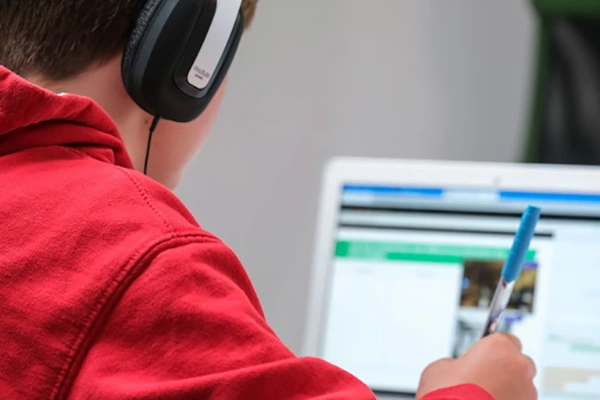
Everything comes down to one overlooked practice: revision of what you have learned, soon after you have learnt it.
Most students review before exams. The students who consistently retain information review within 24 hours of every lecture.
But in reality, it’s enough to read over your notes again, fill in the blanks, turn your cues into questions, or do a quick vocal review for fifteen minutes.
The research on memory consolidation is clear: the first review after learning is the most powerful one. Everything after that is maintenance.
Final Say
Online learning isn’t a lesser version of education. It’s a different version – one that rewards students who take ownership of their process and punishes those who try to coast on passive attendance the way they might have in a lecture hall.
The students who follow these tips during online learning and figure out effective note-taking ways, build the right habits and use their tools deliberately don’t just survive online learning.
They often thrive in ways they didn’t expect – because they’ve developed a skill that no classroom ever explicitly taught them: how to learn on their own terms.
Ans: Review or revision after studying any concept learnt by remote learning is the thing most students overlook and end up forgetting later.
Ans: Remember to record the live sessions and classes and replay them after they end to grasp every concept clearly and make fewer mistakes.
Ans: Making a routine of taking notes while the classes are the best way one can optimise their learning the right way and remember most of the things taught during lectures.
Ans: Students might not understand a few technical terms teachers teach because of vocabulary gaps, which breaks the flow of learning, this is why advancing your vocabulary is essential during learning.