With an ever-evolving business environment, it becomes crucial for young professionals to develop the core traits, such as professionalism, confident communication, an agile mindset, and adaptability, along with the relevant technical skills to stay ahead. These skills can only be developed when an individual identifies the skill gap and begins working for the betterment by taking online courses, completing higher education, or gaining mentorship.
One of the best ways to develop these core traits is by actually working in a field, and there’s nothing better than working for non-profit organisations. With the best nonprofit recruiters, you can gain hands-on experience in diverse fields, such as healthcare, environment, science, and research, enabling young professionals to develop diverse skills. Follow along to know more.
Key Takeaways
- Young professionals must develop core traits that include both soft skills, such as clear and effective communication, professionalism, and adaptability, and technical know-how.
- The best way to develop these core traits is through continuous learning, whether it’s through higher education, online certifications, or mentorship and fieldwork.
- A degree and in-depth technical knowledge build a strong career prospect for young professionals.
Core Traits that Top Recruiters Look For
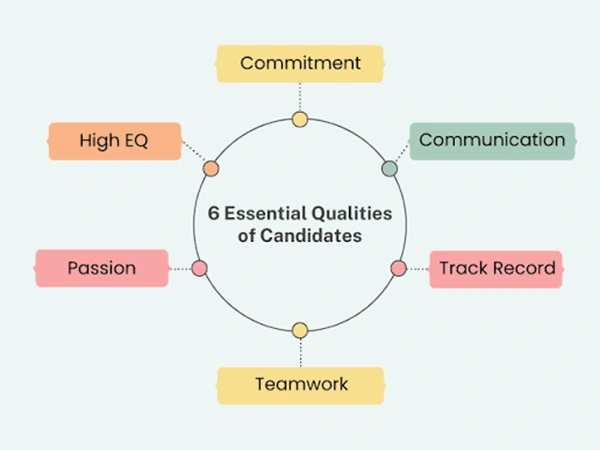
Soft skills, such as effective and confident communication, professionalism, agile mindset, and adaptability, and the relevant technical skills, are some core traits that top recruiters look for in young professionals.
Here’s everything you need to know:
1. Confident and Clear Communication
One of the first things that a top recruiter will notice is how effective, confident, and clear your communication skills are. Clear and confident communication does not always involve using vocab-heavy words; rather, it relies on how articulate a candidate is with his or her answers and on presenting concise yet comprehensive answers to the questions asked.
It involves both verbal and electronic communication, which means a candidate must effectively communicate through email or other professional channels.
2. Professionalism
Professionalism refers to the skilled and respected behaviour a candidate is expected to have. It does not only involve dressing up in formal attire, but also includes multiple things, such as:
- Using appropriate language while communicating
- Respecting personal boundaries
- Showing up for the interview early and staying off the phone
- Taking accountability and respecting the ethics and integrity of the organization.
3. Agile Mindset and Adaptability
Recruiters hunt for candidates with strong agility and adaptability in the ever-evolving business environment. They prefer candidates who are compatible enough to lead projects, identify growth opportunities, make decisions, identify bottlenecks, and remove them proactively. Therefore, candidates must prepare themselves for:
- A combination of soft and technical skills
- Leadership qualities
- Handling a high-stakes project
- Adaptability to a changing business environment
4. AI Know-How and Digital Transformation
With AI being the new normal, candidates are expected to be well-versed in its use, and they must be open to learning. Companies may look for not only tech-savvy professionals with a knowledge of how to use AI, but also candidates who carry an in-depth knowledge of how to incorporate the use of AI in corporate growth strategy. Young professionals must:
- Train for AI in the era of digital transformation
- Enhance decision-making
- Drive innovation
5. Accountability and Team Player Attitude
Being a team player and taking accountability are the traits that top recruiters need in a candidate. He or she must ensure that everyone’s working together, create a supportive environment, and take ownership of their work. Shrugging off responsibility can be a red flag for recruiters.
How to Develop the Core Traits Top Recruiters Look For
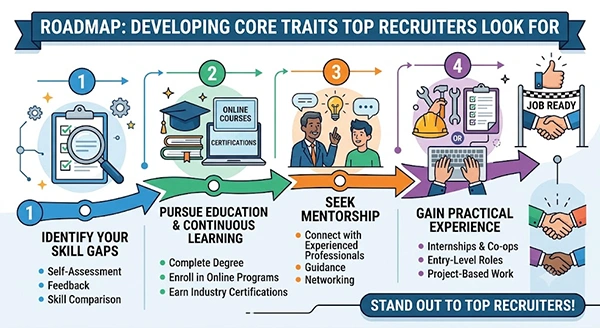
Identifying the skill gaps, completing higher education while taking up online courses and certifications, gaining mentorship, and directly working in the field are some of the best ways for young professionals to develop core traits that top recruiters look for.
1. Identify the Skill Gaps and Sharpen Your Skills
Understanding job market trends can also help you significantly prepare a list of skills that you still need to master. What you need to look for:
- Are you a young professional? If yes, then the first step has to be understanding your own area of interests. This also includes considering what skills are required to be a professional in your area of interest.
- Identify the skills you lack and the skills you have already mastered. Always note your:
- Employer’s feedback
- Performance reviews
- Testimonials from the people you’ve worked with.
- In case you are a fresher, then you can look for job postings and identify your suitability and the skills you lack.
2. Take Up Online Courses and Certifications
Online courses and certifications offer a great way to sharpen your skills. There are multiple online platforms, such as Udemy, Coursera, Google Career Certifications, and LinkedIn Learning, which offer free and paid courses on leading skills, such as cybersecurity knowledge, data analytics, AI, machine engineering, and more.
Alternatively, you can look for offline courses in institutions that not only provide theoretical knowledge but also help individuals work on real-life projects and provide placement assistance. Gaining these certifications and exposure can help young professionals significantly in their career path.
3. Establish Professional Connections and Gain Mentorship
Networking is one of the best ways to learn about industry standards, the skills required, emerging trends, and career growth opportunities. Young professionals must also focus on building connections via professional platforms, such as LinkedIn groups and alumni networks.
Gaining mentorship is equally beneficial. When you learn and work under an expert in the field, there is a high chance that you will understand the skills, working culture, real-world advice, and feedback. However, seeking the right mentor can be a daunting task, but you may take the help of the formal mentorship programs organised by universities or workplaces.
4. Complete Higher Education
If you’re a young professional planning to enter the corporate world, then completing higher education offers you better career growth opportunities. Having an MBA student expertise shapes young professionals and hones their business acumen. Having a higher education degree also indicates to the recruiters that the candidate carries deeper contextual and practical knowledge of the field.
However, before planning for higher education, consider the investment it takes, including the time and money. Higher education can be expensive for people, but you can always look for scholarship programs.
5. Learning on the Field
Gaining practical knowledge by working in the field is yet another way of developing the core traits that top recruiters look for. Working in a professional environment where people are well-versed in soft skills, such as professionalism, confident communication, and adaptability, as well as technical skills, helps you develop skills quickly and effectively.
Moreover, many organizations also conduct training programs for new candidates to prepare them for work. These training programs can have a significant impact on the future career prospects of young professionals.
Wrapping Up!
To sum up, working in an ever-evolving business environment requires young professionals to stay up-to-date with the relevant skills. These can be built through continuous learning and identifying the skill gaps. It ensures that you are the best-suited candidate for a particular job role and enhances your future career prospects.
Frequently Asked Questions (FAQs)
Ans: Communication, professionalism, the ability to become a team player, problem-solving, critical thinking skills, adaptability, and emotional intelligence are the top skills recruiters look for.
Ans: Identifying the skill gaps, completing higher education while taking up online courses and certifications, gaining mentorship, and directly working in the field are the best ways to develop core skills and traits.
Ans: Yes, online courses and certifications from reputed platforms, such as Udemy, Coursera, and LinkedIn Learning, are beneficial. Offline training also works best for gaining hands-on experience on real-life projects.