“To have another language is to possess a second soul.”
– Charlemagne (Medieval King of Franks and the first Holy Roman Emperor)
Bonjour, chers lecteurs! If you are reading this article, I’m sure you must have decided to take on the IB French challenge! Whether you are aiming for Language B SL, HL, or Ab Initio, you are not just learning French; you are learning how to process things, how to present thoughts, and how to connect in a global context.
As 2026 is here, so are the exams, and this may have made you feel nervous, but you don’t need to worry! Cracking the exams is not just about memorizing words; it is about strategy. In this guide, we are now going to simplify the IB French curriculum for you so that you can rebuild your confidence from the ground up.
Key Takeaways
- The theme is essential; therefore, align your study with the five IB themes.
- Pay extra attention to the text type; know the difference between a ‘lettre formelle’ and a ‘journal intime’.
- Use real-world French media platforms to train for listening.
- Don’t just stick to notes; past papers are important to test your knowledge.
What is the IB French Exam
The IB French exam is a test of your communication skills. The IB is not much interested in whether you can recite 17th-century poetry; they want to know if you are able to navigate at French-speaking world. They want to know whether you can write a convincing letter to a mayor, or if you can understand a podcast
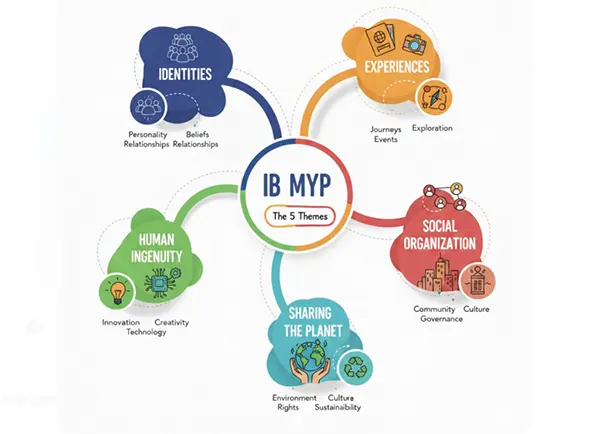
The 2026 session continues to focus on five prescribed themes that include Human Ingenuity, identities, Social Organization, Experiences, and Sharing the Planet. You will be tested on your ability to use French as a tool to explore these global issues; it is more about testing your critical thinking as it is of conjugation.
Fun Fact: French is the only language besides English that is taught in almost every country in the world!
Understanding the IB French Assessment Structure for 2026
Although the structure of the exam is rigorous, it is not unpredictable. There will be two external papers and one internal assessment, which will be Oral.
- Paper 1 (Productive Skills) – This will be a written exam, where you will be given three prompts from which you have to select one. For this paper, you need to master text types like blog posts, think brochures, and formal reports, etc.
- Paper 2 (Receptive Skills) – There will be two parts, Listening and Reading, where you will get original French texts (news articles, interviews, etc.)
- Paper 3 (The Internal Assessment) – It will be an individual oral, based on a visual stimulus for SL, and for HL, it will be based on a literary extract.
If you find yourself struggling through these specific requirements, looking for specialized IB French tutoring can offer you personalized feedback to turn your ‘5’ into a ‘7’.
Core Skills Students Must Master for IB French Success
To conquer the exam in 2026, you need a four-tool player. You can’t just be good at reading; you need to work on your vocal and hearing skills as well.
Listening Skills
To master listening skills, avoid ‘Slow French.’ You can use authentic sources, such as ‘InnerFrench’ or RFI, to practice connectors that can change the entire meaning of a sentence.
Reading Comprehension
To score well, look beyond the gist for specific terms and focus more on identifying synonyms for key vocabulary. If the text says ‘onereux’, it might be asking if something is cher (expensive).
Writing Ability
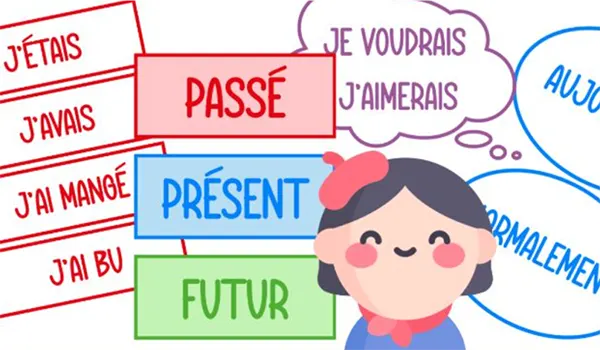
Building a ‘kit’ of complex structures, such as subjunctive, but make sure they are logical and well-organized to avoid confusion. Also use varied connectors such as par contre, d’autant plus que, to express properly. Also, pay attention to the tenses (le passé, le présent and le futur).
Speaking Fluency
To be skilled in speaking, the secret is to stop translating sentences in your mind. Use natural fillers like eh bien, alors, and en fait, which will make you sound more like natives and will help you in expressing your thoughts directly in the Oral examination.
Effective Study Techniques for IB French Exam Preparation
You can take your preparation up a notch by including these study techniques to you schedule:
Vocabulary Building
Skip the long and boring lists of vocabulary; instead, categorize the words according to the five IB themes mentioned here.
Use flash card apps to learn words in context, for example, don’t just learn ‘la pollution,’ memorize, ‘lutter contre la pollution.’
Grammar Practice
Mastering tenses is essential for grammar, which will allow you to move smoothly between passé composé/ imparfait, le présent, and le futur. HL students should use the conditionnel passeé and plus-que-parfait to add depth to their thoughts.
Did You Know?
‘E’ is the most commonly used letter in French, while ‘k’ and ‘w’ are used exclusively in borrowed words such as ‘kiosque’ or ‘weekend’.
Past Paper Analysis
You cannot sit in the exam without practicing at least five years of past papers. It will help you in mastering the ‘IB Logic’ and will assist you in understanding what examiners ask for top marks in each section.
Approaching the Different IB French Exams (Paper I & Paper II)
Both the exams, Paper1 & 2 require different approaches:
- Paper 1: The wrong address is your biggest enemy in Paper 1; if you write a formal letter using ‘Tu,’ you have already lost some marks. Check your vouvoiement to ensure you layout matches the text type asked.
- Paper 2: For Paper 2, time management is the key! Read questions before the text for the reading section, and for the listening section, smartly use the pause time to predict the kind of information asked, whether it is a date, a name, or a feeling.
Final Revision Strategies (or Exam-Day Preparation Tips)
In the final weeks, immerse yourself completely in the world of French! Change the language of your phone to French, watch shows and movies with French subtitles so that your brain doesn’t need to switch to French, but it stays there.
On the day of the exam, have a good breakfast and maybe listen to a French song to get the rhythm of the language flowing in your head before you pick up the pen.
Bonne Chance!
Frequently Asked Questions
No, use of a dictionary is strictly prohibited in IB French external assessments.
The number of words depends on your level (SL, HL, or Ab Initio). Going beyond the word limit is not advised, as it can lead to more grammatical mistakes.
No, not necessarily. The exam aims to test a deeper understanding of French-speaking cultures beyond just France.