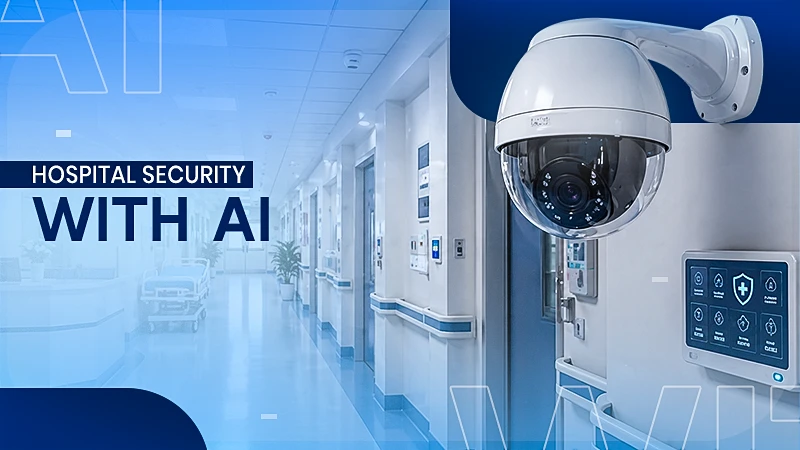
The hospital is high-risk & will be at a complex place from a patient safety perspective, as there are patients, visitors, and hospital staff present 24/7. Between 1998 & 2008, healthcare facilities reported increased incidences of workplace violence, theft, & unauthorized access, as opposed to other industries.
Again, the human operator is monitoring video feeds via a surveillance system, or a facility may fail to identify 95% of critical events after just 20 minutes of monitoring. AI systems will allow healthcare staff to better monitor healthcare facilities by delivering a notification to the healthcare worker immediately, as there is a risk.
Furthermore, the real-time analysis of video by the personnel of the facility’s management team. With a security access control system and the use of environmental sensors, the AI system may enable the healthcare facilities to transition from a reactive to a proactive approach to managing critical events involving patient safety.
KEY TAKEAWAYS
- Eliminate the need for human supervision and reduce the risk of missing an incident by as much as 95 percent with real-time detection of incidents.
- Access control systems to prevent unauthorized personnel from entering highly sensitive areas of facilities.
- for an immediate notification of police on the scene in the event a medical emergency occurs, or an active shooter incident happens.
- Monitor air quality, temperature, and fire dangers using Internet of Things (IoT) devices at all times, providing a holistic, facility-wide method of monitoring safety and security.
1. Real-Time Monitoring Helps Detect Risks Before They Escalate
Hospitals are dynamic environments where situations can change within seconds.
A patient may fall.
A visitor may enter a restricted area.
A hallway may become overcrowded.
Traditional systems record these events. AI systems detect them.
Hospital security systems are now leveraging video analysis software to monitor all activity within the hospital on a continual basis and identify when something is out of the ordinary.
For example, they can detect:
- A patient collapsing in a hallway
- Someone entering a restricted ICU area
- Suspicious movement near medication storage
- Unusual crowd buildup in emergency areas
This is where advanced hospital security systems play a critical role. Solutions like Coram integrate with existing IP cameras and add AI-powered capabilities such as real-time alerts, high-definition video monitoring, and intelligent detection.
Another benefit of hospital security systems leveraging video analytics is integration with key access control systems and environmental detection sensors, allowing hospitals to monitor their security from a single source while keeping their existing physical infrastructure intact.
In this way, staff members are able to take action as soon as they see something happen instead of waiting for someone to report the incident.
In a hospital setting, even a few minutes can make a life-saving difference.
2. Smarter Access Control Protects Patients and Sensitive Areas
Hospitals have multiple restricted zones:
- Intensive Care Units (ICUs)
- Operating rooms
- Pharmacies
- Data centers
- Staff-only areas
If someone uses an area of the hospital to gain access to areas where they are to unauthorized to enter, there is potential for serious harm to patients, a data breach, or theft of medical supplies.
AI based access control systems create a more secure environment by combining electronic entry logs with real-time video verification.
This means hospitals can:
- Detect unauthorized entry instantly
- Identify tailgating incidents
- Monitor access during non-operational hours
- Verify who actually entered a space
For example, if a door opens to a restricted area of the hospital, the system will be able to cross-reference the door opening through video footage. It will notify security personnel if there are unauthorized individuals who may have entered the facility. This reduces the need for human oversight and improves overall accountability. In high-risk environments like hospitals, controlling access is not just about security. It is about protecting patient lives.
3. Faster Emergency Response Improves Patient Outcomes
Emergencies are common in hospitals.
They may include:
- Patient falls
- Medical emergencies
- Aggressive incidents
- Equipment failures
- Fire or safety hazards
Using AI based hospital security systems will increase the amount of time it takes for staff to react after detecting an issue.
In addition to reducing how long it takes to respond, the hospital security system can also detect an issue without anyone having to report it.
For example:
- A patient fall can trigger an alert to nearby staff
- A sudden crowd in the emergency department can signal an issue
- Suspicious activity can be flagged immediately
This allows hospital teams to:
- Respond faster
- Allocate resources efficiently
- Reduce the impact of incidents
Faster response directly improves patient safety and care quality.
4. Continuous Monitoring Reduces Workplace Violence
Workplace violence is a growing concern in healthcare.
Hospitals often deal with:
- Aggressive patients
- Emotional visitors
- High-stress situations
AI-powered surveillance helps detect early signs of conflict.
It can identify:
- Aggressive movements
- Unusual crowd behavior
- Escalating situations
Providing adequate response time for security personnel to intervene before a situation escalates into violence is an important benefit for security personnel.
When at all possible, the security system will alert staff to the possibility of imminent violence in a patient waiting area and allow staff to take steps to prevent further complications before anyone is harmed. This type of protection for patients is beneficial to staff as well. A safer environment leads to better care delivery.
5. Intelligent Video Search Speeds Up Investigations
When an incident occurs, hospitals must have answers immediately. Typical security systems rely on a review of recorded video data by a human operator, potentially consuming hours of time. By utilizing AI technology, video review procedures can be greatly reduced.
They allow staff to search footage using:
- Time
- Location
- Activity
- Person or object
For example:
- “Patient fall near corridor at 2 PM”
- “Unauthorized entry in ICU”
This makes it easier to:
- Investigate incidents
- Identify root causes
- Improve safety protocols
Faster investigations lead to faster improvements. And in healthcare, continuous improvement is essential.
6. Integration with Sensors Improves Environmental Safety
Patients are not the only factor involved with providing safe and secure care, nor is a safe environment solely reliant on patient safety.
Hospitals must monitor:
- Temperature
- Air quality
- Equipment conditions
- Fire and smoke
AI-powered hospital security systems can integrate with environmental sensors.
This allows hospitals to:
- Detect abnormal conditions
- Receive alerts instantly
- Take preventive action
For example:
- A temperature spike in a storage area can trigger an alert
- Smoke detection can initiate emergency protocols
Patients are not the only factor involved with providing safe and secure care, nor is a safe environment solely reliant on patient safety.
7. Centralized Monitoring Improves Multi-Department Coordination
Hospitals are made up of multiple departments operating simultaneously. A hospital is composed of many departments working at the same time. Coordination of security among these departments can be challenging.
This means:
- All camera feeds are accessible in one place
- Alerts are managed centrally
- Teams can coordinate more effectively
For example, if an incident occurs in one department, all appropriate departments can receive alerts immediately, improving communication and response time. Centralized systems ensure that no part of the hospital operates in isolation.
8. Supporting Compliance and Patient Privacy
Hospitals must comply with strict regulations, including HIPAA.
AI-powered security systems support compliance by:
- Monitoring access to sensitive areas
- Recording incidents for audits
- Providing secure data management
Additionally, AI security systems can help to maintain the privacy of patients by ensuring that only those who are authorized to enter secured areas are allowed to do so. This can minimize data breaches and unauthorized access to information about patients. Compliance is not just about avoiding penalties. It is about building trust with patients.
Conclusion
Hospital environments are complex, fast-paced, and high-risk. Traditional surveillance systems are no longer enough to ensure safety. AI-powered hospital security systems provide the intelligence, speed, and integration needed to protect patients, staff, and facilities. They help hospitals move from reacting to incidents to preventing them. And in healthcare, prevention is everything.
FAQs
Advanced systems that utilize AI to monitor hospitals, manage risks, provide alerts in real time, and enhance safety.
Early detection of incidents, rapid response times to events, and prevention of risk.
Yes. Many solutions offer integration with existing IP camera systems, allowing hospitals to upgrade to an AI-powered solution without replacing their entire video surveillance infrastructure.
Modern AI-powered hospital security solutions have been designed to comply with all HIPAA regulations regarding information security and access control.
No. An AI-powered hospital security system supports the efficiency of all security personnel by automating the monitoring of the facility and providing a means of highlighting key incidents.