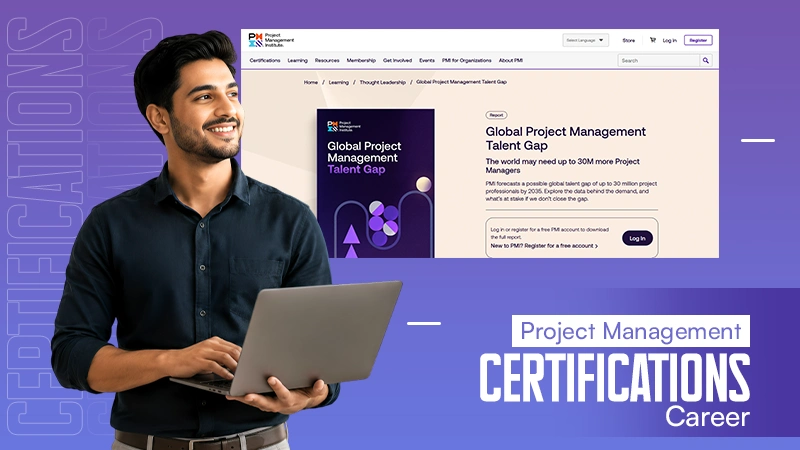

As per the Project Management Institute (PMI), there’ll be a need for about 30 million more project managers by 2035. As businesses invest in digital transformation, infrastructure, new products, and organizational change, the ability to turn plans into measurable results is becoming increasingly valuable.
So, how to differentiate besides the years of experience? Project management certifications provide a standardized way to validate skills such as planning, risk management, stakeholder communication, budgeting, and team leadership. They can also give professionals a clearer path into project management, help experienced managers strengthen their credentials, and support career transitions into roles with greater responsibility.
This involves income growth as well. PMI’s 2025 salary survey found that a Project Management Professional (PMP) certification meant a 17% higher median salary compared to non-certified professionals. However, certification alone does not guarantee a promotion or raise. Its value depends on the credential you choose, your existing experience, your industry, and how effectively you apply what you learn.
This guide explores how PM credentials can support career advancement, which credentials make sense at different career stages, and how emerging skills such as artificial intelligence are changing the profession. You’ll also learn how to choose a certification based on your experience and career goals, and how to use the credential effectively when pursuing your next role, promotion, or salary negotiation.
Understanding the Value of Project Management Certifications
Professional credentials from a recognized institution validate your management:
- Knowledge
- Skills
- Competency
They demonstrate your mastery across various methodologies and business environments of:
- Budgeting
- Risk management
- Scheduling
- Team leadership
Industry-standard institutions, such as the Project Management Institute (PMI), establish these qualification paths to ensure global consistency in project execution. A certification validates that you understand a shared terminology and can apply structured methodologies to deliver undertakings on time and within budget. This systematic training helps professionals move away from ad-hoc planning toward repeatable, predictable project success.
Why Modern Employers Prioritize Certified Professionals
In modern corporate landscapes, organizations face constant pressure to execute strategic initiatives quickly and efficiently. Certified professionals bring structured control to unpredictable environments, minimizing resource waste and lowering execution risks. Employers prioritize these individuals because certified managers are trained to align daily project tasks directly with broader organizational goals.
Certified staff work using industry-standard terminology and practices. This reduces onboarding times and ensures faster execution of complex initiatives. The table below illustrates how certified project managers help organizations improve performance outcomes compared to non-certified personnel.
| Business Metric | Certified Project Managers | Non-Certified Staff |
| Project Success Rates | Significantly higher adherence to budget and scope restrictions | Higher rates of scope creep and budget overruns |
| Risk Management | Proactive risk identification and formal mitigation planning | Reactive handling of issues as they arise |
| Communication Efficiency | Standardized reporting and stakeholder alignment | Inconsistent reporting styles and fragmented communication |
| Resource Utilization | Lean resource capacity planning | Frequent resource bottlenecks and overallocation |
Certified professionals ensure projects are adaptable and completed under budget. This reliance on structured methodologies makes specialized certifications a key driver of modern workforce recruitment.
How Project Management Certifications Accelerate Career Advancement
These certifications boost your income, reputation, and mobility.
Unlocking Higher Salary Potential and ROI
Pursuing professional credentials yields a distinct financial advantage. Certified managers clearly earn more. The PM credentials salary increase roi is measurable and compounding, meaning the initial training cost is quickly recovered through immediate wage gain and long-term career progression.
For example, professionals holding the Project Management Professional (PMP) credential often command substantial salary premiums globally. This economic return makes professional development an active investment in your personal earning power rather than just an educational expense.
| Certification Tier | Expenses (Exam & Prep) | Estimated Annual Salary Range | Estimated Payback Period |
| Entry-Level (CAPM / Google PM) | $300 – $600 | $55,000 – $75,000 | 2 to 4 Months |
| Mid-Level (Scrum / Agile) | $500 – $1,200 | $80,000 – $105,000 | 3 to 6 Months |
| Advanced (PMP) | $1,000 – $2,500 | $110,000 – $140,000+ | 1 to 3 Months |
Optimize CV for Better Roles
Today, ATS (Applicant Tracking Systems) handles candidate filtering. Resumes that clearly display recognized credentials easily bypass these digital filters, placing your application directly in front of hiring managers. Including terms like “PMP” or “CAPM” on your profile establishes immediate professional credibility.
For individuals looking to make a lateral move, project management certifications for career change act as an objective bridge. They demonstrate to prospective employers that you have transferable operational skills, easing concerns about your lack of industry-specific experience. A validated certification proves you can step in and lead complex initiatives without requiring extensive foundational training.
Expanding Global Career Mobility Across Industries
The structured frameworks of modern project methodologies are universal, making these credentials highly adaptable across geographic and industry boundaries. No matter the country or industry, project delivery credentials remain valuable.
This global recognition opens up career opportunities in international markets and multinational corporations. Because these frameworks rely on a standardized vocabulary, certified leaders can seamlessly step into cross-border teams, synchronize operational workflows, and drive projects forward with minimal cultural or structural friction.
Top Project Management Certifications for Every Career Stage
The ideal certification to go for depends on your career stage.
Entry-Level Pathways: Google Project Management & CAPM
Planning a management career requires strong foundations. For those without formal experience, beginner-level certificates like the Google Project Management Certificate and the Certified Associate in Project Management (CAPM) are perfect. These credentials help candidates build essential skills in project documentation, tracking, and communication.
While the Google certification offers a practical, applied introduction to project tasks, the CAPM focus is centered directly on CAPM exam readiness. This credential, managed by PMI, is highly respected by corporate recruiters and aligns perfectly with the standard project management body of knowledge, providing a clear path to advanced certifications later in your career.
| Feature | Google Project Management Certificate | PMI CAPM |
| Target Audience | No experience beginners | Aspiring project managers and junior team members |
| Prerequisites | None | High school diploma and 23 hours of project education |
| Exam Format | Online exams | Proctored 150-question multiple-choice exam |
| Industry Prestige | High for entry-level tech and operational roles | Globally recognized industry standard for junior roles |
For Mid-to-Senior Level: Project Management Professional (PMP)
For experienced specialists, the PMP certification is the premier credential for career advancement. This certification validates your deep understanding of predictive, agile, and hybrid project delivery methods. To qualify, candidates must document at least three years of experience leading projects alongside formal education and structured training hours.
Achieving this credential demonstrates to employers that you have handled real-world project challenges, managed budgets, and coordinated diverse teams. It marks a key milestone in the PMI certification path, establishing you as an elite professional capable of leading high-value business initiatives.
Specialized Frameworks: Agile, Scrum, and PRINCE2
There are specialized framework certifications as well. Fast-moving industries such as software development, product management, and digital marketing rely heavily on agile project management methodologies to manage rapidly changing requirements and support continuous delivery.
Choose whatever suits your goals and location:
- Certified ScrumMaster (CSM): Concerns the Scrum framework, ideal for facilitating team collaboration and organizing short, iterative development cycles.
- PMI Agile Certified Practitioner (PMI-ACP): Validates your broad expertise across multiple agile frameworks, including Scrum, Kanban, Lean, and Extreme Programming.
- PRINCE2 (Projects in Controlled Environments): A highly structured, process-based methodology heavily utilized by government agencies and private organizations across Europe, Australia, and the UK.
The Modern Advantage: AI in Project Management Certifications
AI is penetrating each field of project management, be it its education or operations.
How Emerging Credentials Integrate AI Tools
AI is transforming project delivery. Credentialing bodies are updating their programs to keep pace. Modern training frameworks now include topics on using generative AI and machine learning to build initial project schedules, automate routine tracking, and generate status reports. This change helps professionals concentrate more of their energy on complex stakeholder relationships and strategic decision-making.
By learning how to combine classic frameworks with AI tools, you can analyze large sets of historical project data to spot risks early and balance resources more effectively. Leading institutions are actively updating their study guides to ensure that certified managers know how to use these tools ethically and securely in everyday corporate environments.
Future-Proofing Your Career with AI-Driven Project Skills
Catching up with AI is the need of the job market. Understanding how to use predictive analytics to estimate project timelines, draft risk registers, and automate budget tracking is rapidly becoming a standard requirement for senior leadership roles.
By mastering these AI-driven capabilities, you can help your organization deliver projects faster and with fewer errors. Key skills you should focus on developing include:
- Automated Resource Scheduling: Using smart tools to balance workloads across numerous projects and prevent team burnout.
- Predictive Risk Analysis: Applying machine learning tools to historical data to spot potential project bottlenecks before they delay your timeline.
- AI-Assisted Scope Drafting: Utilizing generative language models to quickly write project charters, requirements documents, and communication plans.
- Performance Analytics Dashboards: Setting up real-time systems that track project health and automatically alert teams to budget or schedule variances.
How to Choose the Right Certification for Your Goals
The right certification depends on your experience, industry, and the time and money you’re willing to invest.
Assessing Your Current Experience Level
To identify how to choose the right PM credential, you must assess your current experience, calculate your educational budget, and identify your target industry. In addition, aligning your goals with credentials directly supports your career trajectory.
Picking the wrong credential can waste valuable time and financial resources. To help you select the best path for your current career stage, consider this experience-based guide:
- 0 to 3 Years of Experience: Focus on building foundational skills with entry-level certificates like CAPM or the Google Project Management Certificate to learn basic terms and processes.
- 3 to 5 Years of Experience: Pursue specialized credentials like the Certified ScrumMaster (CSM) or PMI-ACP to demonstrate expertise in specific project environments.
- 5+ Years: Get to senior leadership with PMP. This validates you have the advanced experience required to direct complex programs and portfolios.
Aligning Credentials with Your Target Industry
Different industries favor different methodology standards. Technology companies, startups, and creative agencies prefer agile project management as they need projects fast, with iterative changes. In these conditions, credentials like the CSM or PMI-ACP are highly valued by hiring managers.
Conversely, industries such as construction, aerospace, and energy rely on clear, step-by-step planning and structured risk management. For these fields, the PMP framework remains the preferred standard. For a relevant resume, choose a credential that fulfils the industry expectations.
Evaluating Study Time, Exam Prep, and Financial Investment
Access to advanced study has changed. Even if you get in, balancing your time and money between work and prep isn’t as easy. While some entry-level options can be completed in a few weeks of self-study, advanced exams like the PMP often require months of deliberate preparation. A structured PMP exam prep plan, formal training programs, and comprehensive practice exams.
Reviewing the requirements, application fees, and renewal guidelines helps you plan your preparation journey effectively without unexpected delays. The table below outlines the preparation time, expenses, and ongoing requirements for major project credentials.
| Credential | Average Study Time Required | Standard Exam Fee | Validity & Renewal Requirements |
| CAPM | 50 – 100 Hours | $225 for members / $300 for non-members | Valid for 3 years; requires 15 PDUs to renew |
| PMP | 150 – 200 Hours | $405 for members / $575 for non-members | Valid for 3 years; requires 60 PDUs to renew |
| CSM | 16 Hours (Course-based) | Included in training course fee ($500 – $1000) | Valid for 2 years; requires renewal fee & SEUs |
| PMI-ACP | 80 – 120 Hours | $435 for members / $496 for non-members | Valid for 3 years; requires 30 PDUs to renew |
Certification can boost your CV and income immediately.
How to Highlight Credentials on Resumes and LinkedIn
Earning your certification is a major milestone, but you must showcase it strategically to attract hiring managers and recruiters. When updating your professional profiles, ensure your credentials are highly visible and clearly communicate your achievements.
Follow these practical steps to optimize your resume and LinkedIn profile for maximum effect:
- Place Credentials Next to Your Name: Add your certification acronym (e.g., “Jane Doe, PMP”) directly in your resume header and LinkedIn headline.
- Optimize Your Summary Statement: Briefly describe your experience leading teams and managing budgets using your certified methodology.
- Add Credentials to Specific Profile Sections: Upload your digital badge to the Licenses & Certifications section on LinkedIn so recruiters can easily verify it.
- Keep Achievements Metrics-Heavy: In your work history, describe how you applied certified methodologies to reduce project costs or speed up delivery times.
Using Your Certification as Leverage in Salary Negotiations
A new certification provides strong leverage for salary negotiations or internal promotions. Once you pass your exam, schedule a formal review with your manager to discuss how your new skills can help solve key operational challenges within the company.
Equip for this conversation by researching industry salary benchmarks for your credential, location, and experience level. Presenting a clear portfolio of your past project successes alongside your new qualifications shows your commitment to professional growth and demonstrates your value to the organization’s bottom line.
Conclusion: Elevate Your Career with Project Management Certifications
PM credentials beget many benefits. They validate your expertise, increase your earning potential, and secure leadership roles. Whether you are starting with an entry-level credential like the CAPM, mastering the gold-standard PMP, or adapting to agile environments, these qualifications prove to employers that you possess the structured frameworks necessary to deliver projects successfully under any conditions.
As industries rapidly evolve and adopt advanced methodologies, the demand for certified specialists who can merge technical execution with strategic leadership remains exceptionally high. By aligning your education with your professional goals, you position yourself as a highly competitive asset to any organization while giving yourself the tools to confidently navigate complex corporate landscapes.
Your career advancement is entirely in your hands. Explore our industry-aligned training programs and comprehensive exam preparation courses today to identify the ideal pathway for your professional goals. Earn that certification and reach for your career potential.
FAQs
Ans: PM credentials can be worthwhile when they align with your career goals and complement practical experience.
Ans: The Google Project Management Certificate and CAPM are two common starting points for people entering the field.
Ans: Yes. A certification can help career changers demonstrate transferable skills such as planning, risk management, stakeholder communication, and team coordination.