
Business management is a rewarding career. It’s not bound to any industry, you can work in finance, healthcare, technology, retail, anything.
Most importantly, it’s still relevant in this cutthroat market where AI is working most of the jobs. As per the U.S. Bureau of Labor Statistics, 942,500 business and finance jobs are projected annually between 2024 and 2034.

But is it for you? You’ll get the answer once you get to know what business administration involves, the skills required, the qualifications expected, and the employment pathways available.
In this article, I’ll discuss these aspects in detail to help you make an informed decision whether to take up the field or not.
KEY TAKEAWAYS
- Business administrator is a stable, versatile, and growth-oriented career option.
- You manage company operations as a company administrator.
- Leadership and communication skills are primarily important in this field.
- This career is futureproof, but choose only if it aligns with your interests and future goals.
What Does Business Administration Involve?
Corporate governance entails managing the operations of a company efficiently and effectively. It encompasses planning, organising, staffing, directing, and controlling operational activities to achieve organisational goals. You do budgeting, resource allocation, project management, and policy implementation. They also play a key role in ensuring compliance with regulations and maintaining smooth internal processes.
Business administration encompasses many roles:
- Administrative assistants
- Office managers
- Operations coordinators
- Executive assistants
- and many more.
As you grow, you’ll become an operations manager, a business analyst, or even a chief operating officer. This diversity makes it an attractive option for individuals who value flexibility and growth.
Skills You Need for Success
You need to have a great balance of technical and soft skills to shine in this field. Strong organisational skills are essential, as you will often manage multiple tasks and deadlines. Attention to detail is equally important, especially when handling financial records or compliance documentation.
Communication skills are important too. Company administrators interact daily with:
- Colleagues
- Clients
- Stakeholders
Hence, the ability to convey information clearly and professionally is vital. Problem-solving and analytical thinking also play a significant role, as you will frequently encounter challenges that require innovative solutions.
All careers are increasingly requiring you to know digital tools, and so does business administration. Many of the job tasks now rely on software for scheduling, data management, and reporting. Familiarity with platforms such as Microsoft Office, project management tools, and customer relationship management systems can give you a competitive edge.
Why Choose Business Administration?
People choose business administration for its versatility. Unlike specialised careers that confine you to a single industry, operations management skills are transferable across sectors. This means you can work in healthcare today and move to finance or technology tomorrow without starting from scratch.
Also, the career is quite stable, in the job market sense. Every organisation, regardless of size or industry, requires administrative support. So there stays a consistent demand for these professionals. Furthermore, business administration roles often serve as stepping stones to higher-level positions, making it an excellent choice for those with long-term career ambitions.
You’ll need to handle the following aspects in corporate governance roles.
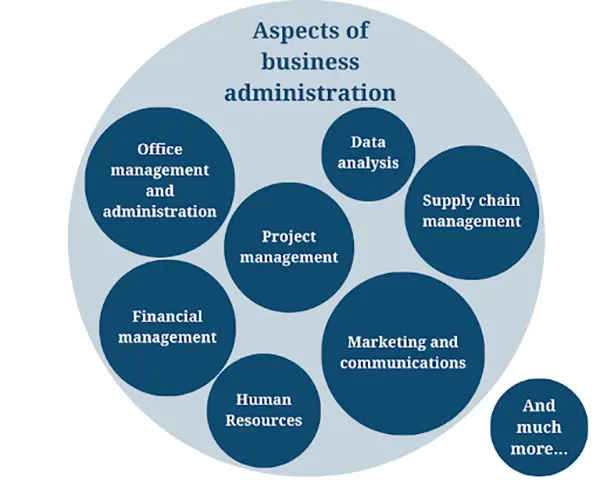
Qualification Expectations and Employment Pathways
You don’t get to run businesses without proper qualifications. While some entry-level roles may only require secondary education, most employers prefer candidates with formal training. A popular option is completing a Certificate IV in Business Administration, which equips you with practical skills in areas such as document preparation, communication, and office technology.
Offered by MCI Institute, this certification is designed to prepare you for real-world office administration. It also demonstrates a commitment to professional development, which can strengthen job applications.
Get this certificate, and numerous employment pathways will open to you. Many graduates start as administrative assistants or office coordinators, gaining hands-on experience in managing day-to-day operations.
With time and experience, you can progress to supervisory roles, such as team leader or office manager. For those who aspire to senior positions, further study such as a diploma or degree in business, can open doors to roles like operations manager or business analyst.
Career Growth and Salary Prospects
The career growth is almost exponential in operations administration. Working entry-level builds your skills and networks. As you gain experience, you can move into specialised areas such as human resources, finance, or project management. The pay rises, but so do responsibilities.
Salary depends on the exact:
In Australia, administrative assistants typically earn between $50,000 and $65,000 annually. Office managers earn upwards of $80,000. Senior roles such as operations managers or business analysts often command salaries exceeding $100,000. These figures highlight the potential for financial stability and growth within the field.
Is Business Administration Right for You?
Well, it completely depends on your:
- Interests
- Strengths
- Long-term goals
This field is for people-persons who enjoy organization and problem-solving. It also suits individuals who value flexibility and want a career that offers diverse opportunities across industries.
However, it can’t be all hunky dory right? Business management roles can be demanding, requiring you to juggle multiple responsibilities and adapt to changing priorities. Strong time management and resilience are essential to succeed in this environment.
Tips for Getting Started
Here are some practical steps to help you get started in the area:
- Hone Your Skills: Identify your strengths and areas for improvement. Focus on developing organisational, communication, and digital skills.
- Get Qualified: Enrol in a Certificate IV in Business Administration to gain practical knowledge and become employable.
- Gain Experience: Get into internships or entry-level roles to apply your knowledge and skills in the real-world.
- Network: Connect with professionals in the field.
- Plan for Growth: Set long-term goals; specialize through further study.
The Future of Business Administration
Don’t worry, the corporate governance field is out of danger. AI and automation are taking up most of human jobs, but administration is still not its cup of tea. In fact, administrators are required even more to deal with this transformative phase.
The human element remains irreplaceable, so the focus should be on skills:
- Communication
- Problem-solving
- Leadership
Polish these, adapt, and grow towards a rewarding career.
Final Thoughts
Business administration is a career choice that is:
- Stable
- Versatile
- Growth-oriented
Whether you’re just starting out or jumping into the field, business administration remains lucrative. Just develop valuable skills and progress to senior roles. By obtaining the right qualifications and gaining practical experience, you can build a successful and fulfilling career in this field.
Ans: yes, it’s a highly versatile and lucrative field.
Ans: Degrees give a strong foundation in this career, but the heavy lifting is still done by skills and experience.
Ans: Moving from operations to strategy can be considered a success in corporate governance.