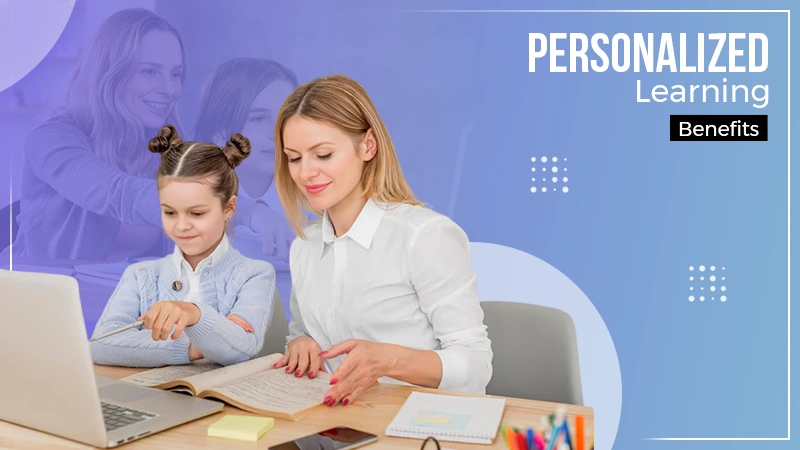
The way teachers teach is shifting. Instead of teaching the same lesson to the whole class at once, there are a number of teachers who are using personalised learning today for their students. Personalised learning allows students to complete school assignments at their own level.
Many parents are hiring tutors to help their children with schoolwork. If you want to find the best tutors in Toronto for your child, look for a program that focuses on pinpointing areas of weakness. For those students, as opposed to just passing out the same type of tutor to everyone.

KEY TAKEAWAYS
- Personalizing learning focuses on a student’s strengths to make learning more effective.
- Besides everything, a teacher can personalize lessons through collaborative groups, special projects, or individualized instruction.
- None of the students will experience a loss of learning due to how they process learning.
- Many of today’s workers are expected to learn new material and change their methods of performing their job responsibilities regularly.
1. Tailored Pacing and Mastery-Based Progression
One major advantage of personalized learning is that students progress at their own pace.
In traditional educational settings, all students have to learn the same subject on or before a particular date, regardless of whether they learned the previous subject or not. When students miss these steps, they often struggle with more difficult work for a long time.
- Eliminating the middle bias. This method stops focusing only on the average student. In regular schools, fast learners often have nothing to do, while others fall behind. Instead, every student gets work that matches their own skill level.
- Encouraging deep understanding. It also helps students learn topics fully. A student starts a new lesson only after they show they understand the current one. This creates a strong base for harder subjects later.
- Reducing academic anxiety. Students do not have to move at the same speed as the rest of the group. This helps them feel comfortable asking questions. It also allows them to learn from their mistakes without the pressure of falling behind.
A student might need three weeks for a hard math topic but only three days for history. This is not how most people learn.
By changing the way students receive the information from their teacher to become more active participants in their education, they will be able to recall the information more easily over time. It also makes them feel more positive about their school work.
2. Increased Student Agency and Ownership
Students learn better when they choose how and what they study. Most students participate in their own education through attending their own school’s educational centre.
They receive the resources and guidelines that teachers provide their students, using the same method of instruction as they do for every other student. Having a choice helps them stay interested and work harder.
- Choice in content. Students can choose topics they like. For instance, they might study physics using sports data or history through art. The main lessons stay the same, but the way students learn them changes.
- Self-regulation skills. This approach also teaches students how to manage their own work. They must set goals and track their own progress. These habits are helpful for university and future careers.
- Intrinsic motivation. Students usually work harder when lessons relate to their lives. They learn because they are curious about the topic rather than just trying to get a good grade.
Students take more responsibility for their learning when they have choices.
Subsequently, students will be more motivated to be actively involved in their own education. This may be because they will reconnect with their teachers rather than just being passive listeners during class time.
They stop feeling forced to learn and start wanting to understand the topics.
3. Data-Driven Insights and Precision Teaching
Modern personalized learning often uses computer programs to track student work. These programs show teachers exactly how each student is doing. This data helps teachers see when a student gets stuck. The teacher can then provide help right away to fix specific problems.
- Instant feedback loops. Digital tools give students answers right away. These programs explain why an answer is wrong so a student can fix their mistakes immediately. This is faster than waiting days for a teacher to grade a paper.
- Identifying hidden gaps. Data also helps teachers find specific problems. For example, a teacher can see if a student only struggles with decimals rather than all of math. The teacher can then give a short lesson to fix that one issue.
- Objective progress tracking. Progress tracking is also clearer. Teachers and parents can see a map of how much a student has learned. This makes it easy to see growth and change future goals.
Computers and software handle the daily tracking of student work. This technology manages tests and progress records. Because the machines do this repetitive work, teachers have more time. They can then focus on helping students directly and providing personal support.
4. Cultivating Diverse Learning Styles
People learn in different ways. Some students understand things better by looking at pictures. Student data is collected through the use of these programs, providing teachers with an accurate view of how well each student is doing.
Teachers can identify when a student is struggling through the use of this information. It focuses on how each person actually learns.
- Multimodal resources. A personalized lesson can include many different tools. This often means using podcasts, computer simulations, reading, and group projects at the same time.
- Accessibility and inclusion. Personalized learning is necessary for students with disabilities or different ways of thinking. It is not just an extra feature. It allows teachers to build specific help directly into every lesson.
- Building confidence. This method also helps students feel more confident. A student might realize they are not bad at a subject. Instead, they just needed someone to explain it in a different way.
Teaching in different ways makes sure every student can learn. These systems aid teachers with the routine tasks of administering assessments and maintaining an ongoing record of academic progress.
Since machines are performing many of the tedious jobs previously performed by humans, teachers now have increased time to devote to instructional delivery.
5. Preparation for a Non-Linear Workforce
Modern jobs are not about following orders or remembering facts. Some students prefer listening to a narrative rather than physically constructing a project.
It helps to meet the needs of each student, rather than providing a one-size-fits-all approach to learning.
This approach prepares students for the types of careers they will have in the future, which is really important for students to know about the careers they will have.
- Lifelong learning mindset. Students who manage their own studies learn how to keep learning. This is important because job skills change quickly today. They stay prepared for new types of work.
- Critical thinking over rote memory. This method also focuses on solving problems instead of just remembering facts. Students must show they understand a topic to move forward. This helps them learn how to think rather than just how to pass a test.
- Adaptability. Learning in different ways also makes students more flexible. They use many tools and methods to finish their work. Employers often look for people who can adapt to new technology and different situations.
The primary purpose of school is to prepare students for adult life.
By focusing on developing the necessary skills to adapt to change, rather than relying on testing and performance evaluation, students develop the skills necessary to be successful in a rapidly changing global economy.
Moving away from tests and focusing on personal growth helps students learn how to adapt to new situations. Skills such as adaptability and critical thinking are going to play an important role in students’ ability to adjust quickly to the changes they will experience in a constantly evolving world.
Frequently Asked Questions
In traditional education, students in public schools learn according to a uniform schedule, whereas with personalized learning, each student can learn their own way at their own speed, and in ways that suit their own needs.
Although technology and data can help to manage the learning process, consider taking the help of a teacher for a large part of this process.
Not really, as teachers will provide time for students to work in groups or provide support to one another during the learning process.