Imagine you are sitting at the kitchen table, watching your child eat a handful of grapes. Suddenly, they go silent and start choking. Usually, in that pure panic, many individuals don’t know what to do, and the efforts of dialing emergency services seem futile as they take a long time to arrive.
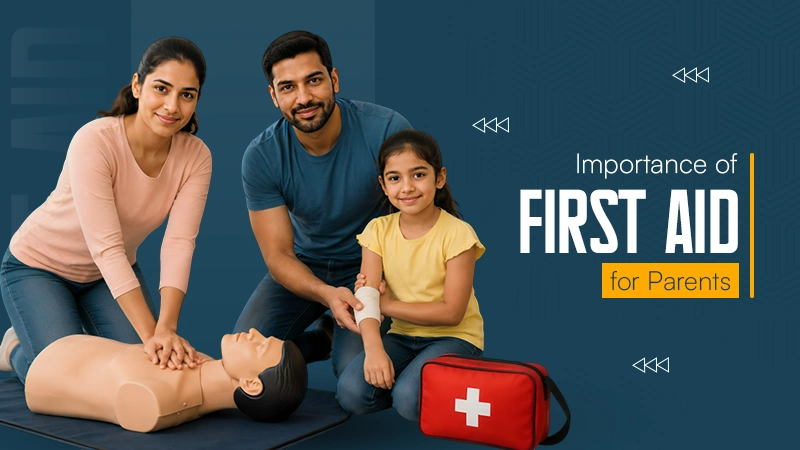
This is why it is important to learn about basic CPR and first aid through certified training providers like Coast2Coast. They equip you with real-world skills that help you deal with emergencies independently, thereby saving lives in the process.
This guide covers how blended courses work, what practical skills you actually learn and practice, and why fast reaction time saves children’s lives.
Key Takeaways
- Without a consistent flow of oxygen, brain damage can occur in just a few minutes
- You learn how to confidently combat severe allergic reactions, high fevers, and deep cuts
- By physically repeating the steps in a safe classroom, your body learns to function automatically when your adrenaline levels spike in real life
- You can complete all of the reading and theory modules online comfortably while your kids are napping or busy at school
Why Do Fast Reactions Matter at Home?
When a child starts to choke or struggles to breathe, the time starts ticking immediately. Without a consistent flow of oxygen, brain damage can occur in just a few minutes. Depending on where you reside, an ambulance may easily take eight to twelve minutes to pull into your driveway.
If you step in right away with back blows or chest compressions, you are literally buying your child time. You act as their temporary heart and lungs. That immediate reaction can easily be the difference between a close call and a complete tragedy.
What Real-World Skills Will You Actually Learn?
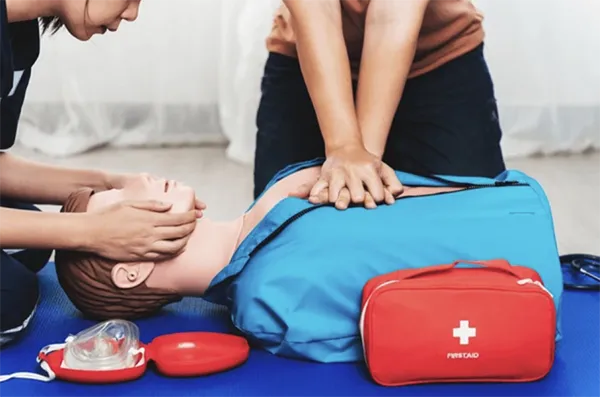
A standard first aid class skips the confusing medical jargon. Instructors focus entirely on practical skills that you will actually use. You will practice CPR on specialized infant and child mannequins until you find the exact rhythm and depth required.
Additionally, you also learn how to confidently combat severe allergic reactions, high fevers, and deep cuts. Instructors are tasked to do just that by building your muscle memory in critical situations.
By physically repeating the steps in a safe classroom, your body learns to function automatically when your adrenaline levels spike in real life.
Fun Fact
The ideal compression rate of 100 to 120 compressions per minute matches the tempo of the Bee Gees song Stayin’ Alive perfectly.
How Does Blended Learning Fit a Parent’s Schedule?
Finding a babysitter for an entire weekend just to take a class is incredibly frustrating. We know parents are stretched thin. That is exactly why blended learning is so popular right now.
You can complete all of the reading and theory modules online comfortably while your kids are napping or busy at school. After finishing the online training, you just attend a brief, in-person practical session to run through the physical drills with an experienced instructor.
This is a highly efficient way to get your WSIB-approved certification without needing to sacrifice your entire weekend for completion.
If you are looking for first aid training near Nipissing Road, Main Street East, or other areas close to our facility, then you may reach out to Coast2Coast First Aid/CPR – Milton in that area.
What Are the Most Frequently Asked Questions About Pediatric First Aid?
Ans: Yes, it is quite different because for an infant, you can only use two fingers in the center of the chest to perform compressions, and your rescue breaths are much smaller and gentler.
Ans: If they are coughing loudly, encourage them to keep coughing, but if they are unable to make any sound at all, immediately dial 911 and begin switching between five firm back blows and abdominal thrusts.
Ans: Yes, standard training includes how to recognize the signs of severe allergic reactions and the safe, proper way to administer an epinephrine auto-injector.
Ans: Your official certification is valid for three years. However, parents are highly encouraged to take a short revision course every year to keep their physical skills sharp.