Gone are the days of teachers and other staff sitting together in a room and deciding on certain topics to add to the generic curriculum designed for all students, irrespective of their personal strengths and weaknesses.
The advancement of technology has led to a clear revolution in this aspect, as many educational institutions are transitioning toward AI-driven knowledge clusters to assist them with the creation of a digital curriculum design, made by a comprehensive analysis of data gained from each student’s individual performances.
This article highlights how AI-driven knowledge clusters have reshaped how the curriculum is designed and what benefits it offers to students and educators.
Key Takeaways
- These clusters use AI to develop a dynamic curriculum that combines various functionalities to deliver a personalized experience to each individual
- Traditional curriculum design used to be rigid and linear, providing no room for changes or alterations as it progressed through the daily sessions
- AI-powered clusters provide many advantages and benefits to educators and students, leading to their widespread adoption
- This new system also suffers from a few drawbacks that require further introspection to attain clarity on its operations
What are AI-Driven Knowledge Clusters?
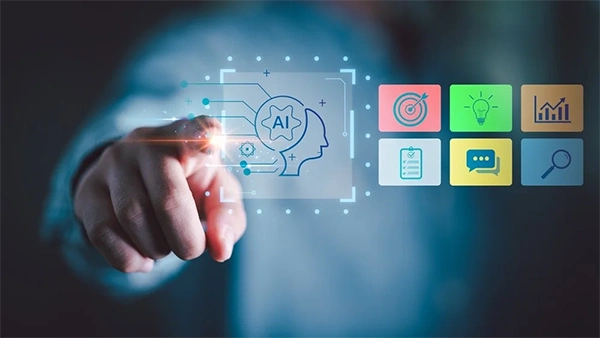
The use of artificial intelligence to develop a dynamic curriculum that combines educational concepts, learning methods, individual performance analysis of students, and the generation of assignments refers to an AI-driven knowledge cluster.
This helps create a personalized experience, which is tailored to every learner’s requirements and learning methods, that assists them the best in successfully grasping all concepts and information present in the program.
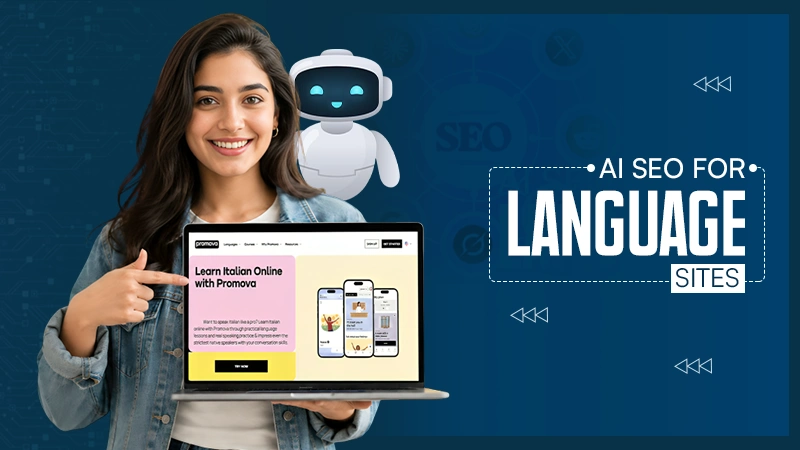
So, a person grasping concepts in English would experience different inputs than an individual learning to speak Italian for professional uses. This shows how the technology also supports multi-lingual adaptations.
It works by combining Natural Language Processing (NLP) and Machine Learning (ML) to intake a large amount of data and break it down into smaller parts, thereby presenting it in a simplified and optimized manner.
How Do They Reshape Curriculum Design

Earlier, the traditional curriculum design used to be rigid and linear, thereby giving no room for improvements or changes as it progressed through the daily classes.
But now, the curriculum evolves, adapting to the user’s answers, time taken, understanding, and how they handle each stage or complexity of a problem.
This method has also given rise to online learning. As remote classes and digital educational courses take center stage, this addition proves to be immensely valuable for students and educators, providing them with the utmost comfort and benefits for enrolling in one of these integrated programs.
Key Benefits For Students and Educators
These AI-powered clusters provide numerous benefits to learners and educators alike, such as:
- Efficiency: This saves professors a lot of time, as grading, checking, and other administrative tasks are processed by the AI itself.
- Personal Attention: It provides educators with ways to interact with every student and give them different instructions, even in a large classroom setting
- 24/7 Support: Learners can engage with the always available support features to clear their doubts or ask for advice from AI agents.
- Remote availability: Such functionality has allowed students to complete their courses from anywhere in the world, without interruptions. It also provides educators with the same benefit, giving them the option to monitor performances remotely.
These key advantages have enabled the widespread integration of AI-driven knowledge clusters inside pre-existing learning methods to further improve and advance them over time.
Fun Fact
Advanced platforms use predictive AI algorithms to track how long a student takes to learn a word and calculate the precise moment they are about to forget it, thereby reminding them at that instant to review it.
Real World Applications in Digital Learning
Digital learning has clearly transformed, allowing for these real-world applications to become possible during regular operations:
- Online Tutoring: These clusters enable the use of online methods and software to simplify learning at home by creating self-guided interfaces that require little to no assistance in navigation, where educators can easily monitor and provide oversight to the progress of students.
- Resource Organization: AI automatically compiles reading material and other documents and sorts them accordingly across different channels, something which professors had to do themselves manually.
- Assignment Scheduling: Tasks are handed out to students as they move through the course, with fixed time limits and AI-generated question lists, requiring minimal input from teachers.
- Personalized Learning: Every progress path is tailored perfectly to individual learning ability and style, with AI instantly recognizing when to pivot or try new ways to make a person grasp the concept completely.
- Performance Analysis: The performance reports of individuals enrolled in the course are routinely provided to educators, who oversee such insights and suggest ways to alter the learning technique or even mentor and help them out.
This indicates that such AI-driven functionalities have enhanced the ways of learning, leading to their adoption in many areas of the educational sector.
Challenges and Considerations
As with any new technology, some issues are bound to occur, be it related to technical faults, adoption failure, ineffective functioning, and more.
The AI-driven knowledge clusters are difficult to incorporate into every institution, as they require a stable and strong infrastructure to begin with.
Furthermore, the ethical and data privacy considerations are something that requires extensive looking into to fully grasp how the collected information is dealt with after use.
Another known issue is the over-reliance on AI, which continues to plague actual learning of students, as learners begin to just ask the all-knowing robot if they ever run into issues, instead of thinking it over and solving the equations independently.
Final Thoughts
The addition of AI-driven knowledge clusters proves to be a valuable one when compared with traditional curriculum designing methods, with many new features and benefits aimed at educators to teach better, and for students to understand easily.
But a few inherent challenges and considerations still remain that require deeper analysis to judge and improve the tools and platforms, and make them completely ready for future generations.
FAQs