Physiology is a subject where students learn how organs, tissues, and biological systems work together. Standard methods like books and lectures provide information, but these formats can make it difficult for students to see how processes move plus change. Augmented reality tools create a learning experience where students interact with virtual structures and functions – these tools turn abstract ideas into visible images that help students understand the material.
KEY TAKEAWAYS
- Augmented reality helps students visualize complex physiological processes that are difficult to understand through textbooks alone.
- Interactive 3D models allow learners to explore body systems from different angles and at their own pace.
- AR strengthens the connection between anatomical structures and their functions, improving overall comprehension.
- Increased student participation and immersion can improve knowledge retention and motivation to learn physiology.
The Importance Of Visual Learning In Physiology
Many parts of physiology involve processes that are not visible to the eye. Examples include how blood moves, how nerves send signals, and how cells communicate – these functions happen inside the body but also require students to imagine them when they only use still images. Medical augmented reality helps students see these processes in real time.
When students see mechanisms move in a three-dimensional space, they can connect facts with how the body works. Visual learning helps students remember information because they observe how systems operate together instead of only reading about them.
Creating Interactive Learning Experiences
Augmented reality tools encourage students to participate rather than watch. Students move around virtual models and look closely at specific parts from many angles – this interaction helps students stay interested in the lessons and encourages them to learn more about how the body works.
These experiences also allow students to choose their own speed. Students are not limited to watching a teacher – they can spend more time on difficult topics as well as repeat activities – this flexibility is helpful for different ways of learning and helps students feel certain about what they know.
Improving Understanding Of Complex Body Systems
Physiology involves multiple systems that work at the same time. It is often difficult to understand how the heart, lungs, and nerves interact when books present them in different sections. Augmented reality shows the connections in one image.
Students gain a clear view of cause or effect when they see integrated processes. As an example, they can see how oxygen levels change breathing and blood flow – this view helps students understand the body as a whole instead of memorizing facts in isolation.
Supporting Anatomical And Functional Connections
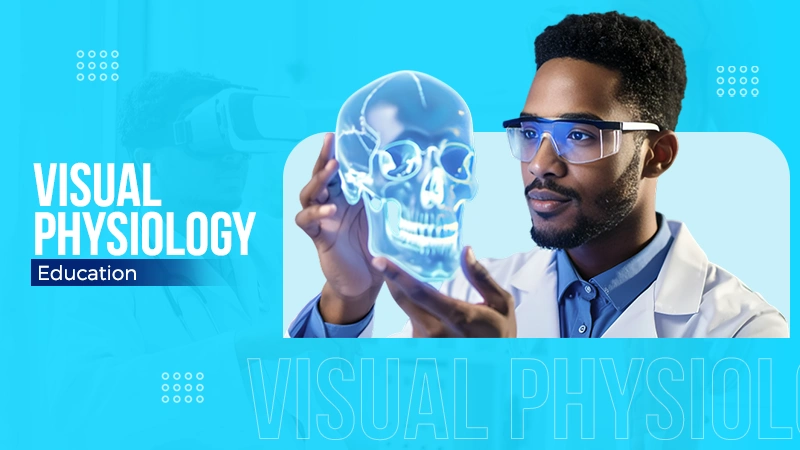
Knowledge of physiology depends on how well a student understands the link between the shape of a body part and what that part does. Augmented reality tools link virtual models with their functions so students can study both.
As an example, a student can look at the shape of the heart while they watch blood move through it. Combining information about structure with function helps students learn. They can see why certain parts exist and how those parts help the body perform.
Enhancing Classroom And Laboratory Instruction
Augmented reality is a helpful addition to standard teaching – Teachers can use virtual models during lessons to show processes that are hard to describe with words – these images can help students understand and talk about the subject.
Laboratory lessons are also better when they include augmented reality. Students can use digital images to look at systems while they perform experiments or study specimens – this method links theory to practice, which makes lab work more informative.
Increasing Student Engagement And Motivation
Success in learning often depends on how interested a student is. Augmented reality makes lessons interesting because it allows for exploration – these tools often hold attention better than traditional materials plus encourage students to be active.
Students are more motivated when they have control over their learning. The ability to change virtual models and investigate the body on their own creates a sense of discovery – this interest often leads students to study more and work harder to learn difficult topics.
Integrating Advanced Visualization Technologies
Schools are using more digital technology in science classes – 3D medical animations create environments where students see systems in more detail than traditional methods allow.
Three-dimensional animations help students understand processes like muscle movement but also nerve signals – these animations show movement and change over time, which are necessary for understanding how the body works.
Conclusion
Augmented reality tools are beneficial for physiology because they make complex ideas easier to see and study. Through models as well as digital technology, students create connections between the parts of the body and their functions. As schools use new methods, augmented reality is a helpful resource for student comprehension and academic success.
The use of such devices will also help students actively participate in learning activities, thus increasing their engagement and improving information retention. By making students interact with the processes of the human body, augmented reality bridges the theoretical and practical knowledge. It is expected that in the future, as educational technologies continue to develop, AR will be widely used in science and healthcare.
FAQs
Augmented reality (AR) uses digital 3D models and interactive visuals to help students explore and understand how the body’s systems function in real time.
AR makes complex physiological processes easier to understand by allowing students to visualize, interact with, and explore body systems from different perspectives.
AR can help students learn about blood circulation, nerve signaling, muscle movement, respiratory functions, cellular processes, and the interaction between body systems.
3D visualizations help students connect anatomical structures with their functions, making it easier to understand how different parts of the body work together.