
AI doesn’t just answer questions. It’s now making decisions, using tools, coordinating workflows, and completing complex tasks with minimal human intervention. In PwC’s 2025 survey of 300 senior executives, 79% have AI in their companies, and within them, two-thirds (66%) verified that it’s delivering measurable value through increased productivity. In fact, 88% planned to increase budgets for agentic AI within a year.
For professionals, this marks an important shift. Employers increasingly value people who understand how AI agents are designed, evaluated, deployed, and governed, not just how to write better prompts. Skills like workflow orchestration, retrieval-augmented generation (RAG), tool integration, evaluation, and human oversight are quickly becoming part of modern AI roles. The World Economic Forum also identifies AI and big data among the fastest-growing skills through 2030.
If you’re looking to build practical, job-ready expertise, these are five of the best Agentic AI courses that teach you how to deploy smart agents in real-world business and technical workflows.
KEY TAKEAWAYS
- Agentic AI is far beyond just prompt engineering. It does planning, RAG, orchestration, evaluation, and governance.
- The best courses combine theory with hands-on projects, case studies, or capstone experiences focused on real-world deployment.
- Technical professionals may benefit most from Johns Hopkins or Stanford, while business leaders should consider Kellogg or UC Berkeley.
- No-code learners can still build sophisticated AI workflows through MIT’s practical, tool-based curriculum.
How We Selected These Best Agentic AI Courses
The selection criteria followed:
- Workflow Relevance: We prioritized courses that go beyond general AI, focusing on how agents are used practically and technically in businesses.
- Deployment Focus: Preference went to programs that include hands-on projects, case studies, capstones, or specific coverage of agent workflows, orchestration, or evaluation.
- Professional Fit: We focused on options that working professionals can realistically complete without leaving their current roles.
- Provider Quality: Every program here comes from a well-known institution with visible faculty involvement and a defined curriculum.
Overview: Best Agentic AI Courses for 2026
Here’s a quick overview of the five courses:
| # | Program | Provider | Primary Focus | Delivery | Ideal For |
| 1 | Certificate Program in Agentic AI | Johns Hopkins University | Python-based AI agents, RAG, and multi-agent workflows | Online | Professionals who want applied agent design and deployment skills |
| 2 | AI Strategies and Applications for Leaders | Kellogg Executive Education | Strategy, business implementation, and transformation roadmaps | Online | Leaders planning AI agent adoption across functions |
| 3 | No Code and Agentic AI | MIT Professional Education | No-code agent building, ML, GenAI, multi-agent systems | Online | Professionals seeking practical no-code agent deployment skills |
| 4 | Agentic AI: Strategy, Applications, and Organizational Impact | UC Berkeley Executive Education | Governance, strategy, case studies, capstone work | Online | Senior leaders responsible for AI adoption outcomes |
| 5 | Self-Improving AI Agents | Stanford University | Graduate-level study of adaptive smart agents | Online | Professionals who want a more technical Stanford option tied to agent behavior |
5 Best Agentic AI Courses for Deploying AI Agents in Real Workflows
1. Certificate Program in Agentic AI | Johns Hopkins University
This Agentic AI Course by Johns Hopkins University is built for professionals who want hands-on experience designing, deploying, and evaluating AI agents rather than simply learning the concepts behind them.
Johns Hopkins positions the program around autonomous, goal-driven systems that can perceive, reason, and act independently.
What makes it stand out is that it does not stop at prompt engineering. It moves into Python foundations, advanced frameworks, RAG, observability, and multi-agent workflow design.
Delivery & Duration: Online, 18 weeks.
Credentials: Certificate of Completion from Johns Hopkins University, plus 13 Continuing Education Units upon completion.
Instructional Quality & Design: The curriculum covers Python for agentic AI, LLM integration, prompt engineering, RAG, symbolic reasoning, agent frameworks, AI-assisted coding, weekly live mentorship, live masterclasses, hands-on projects, and real-world case studies.
Support: Dedicated program manager, academic learning support, discussion forums, peer groups, and weekly live sessions with industry mentors.
Key Outcomes / Strengths
- Learn to build Python-based AI agents that can reason, plan, act, and learn with more autonomy.
- Understand how to scale from single-agent systems to multi-agent workflows that coordinate complex tasks.
- Develop stronger judgment around evaluation, hallucination detection, and real-world deployment choices.
2. AI Strategies and Applications for Leaders | Kellogg Executive Education
Not every AI leader needs to build agents from scratch. Kellogg’s program is designed for professionals who need to understand how agentic systems fit within a business. That makes it especially useful for people responsible for choosing workflows, prioritizing use cases, and connecting AI adoption to measurable business value.
The program explicitly covers generative and agentic AI applications, including smart agents, and ties them to customer experience, operations, talent productivity, and innovation.
Delivery & Duration: Online, 12 weeks, with an expected commitment of about 4 to 6 hours per week.
Credentials: Certificate from Kellogg Executive Education.
Instructional Quality & Design: The program uses interactive discussions, try-it activities, practical assignments, industry examples, and frameworks such as AI Canvas 2.0, AI Radar 2.0, and the AI Capability Maturity Model.
Support: Faculty-led online delivery with structured modules and applied assignments designed for business leaders and senior professionals.
Key Outcomes / Strengths
- Identify high-value AI use cases across customer experience, operations, and support functions.
- Assess AI readiness and build a transformation roadmap instead of treating agents as isolated experiments.
- Understand where agentic AI can improve productivity, revenue growth, and innovation inside existing workflows.
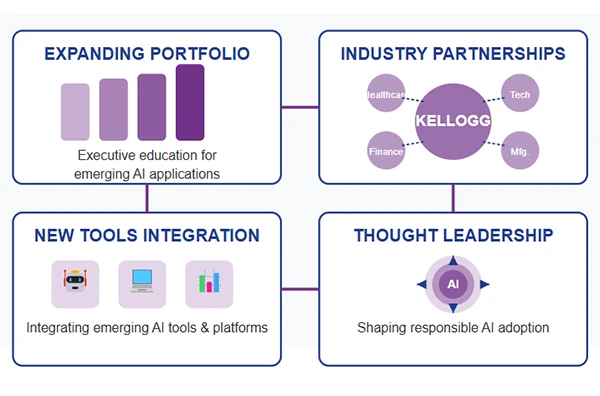
Kellogg aims to transform its education approach based on business changes with:
3. No Code and Agentic AI | MIT Professional Education
If you want an Agentic AI Certification without becoming a full-time programmer, MIT’s no-code program offers one of the most practical entry points.
The course covers machine learning, generative AI, and intelligent agents, but the real advantage is that it connects those ideas to workflow execution. That includes autonomous agents with planning, memory, tool use, and multi-step task completion, along with multi-agent system design.
Delivery & Duration: Online, 14 weeks.
Credentials: Certificate of Completion from MIT Professional Education, plus 10 Continuing Education Units upon successful completion.
Instructional Quality & Design: The curriculum is built around MIT-designed content, recorded sessions from MIT faculty, industry projects, case studies, and hands-on work with no-code tools such as KNIME, n8n, NotebookLM, Google AI Studio, and Claude.
Support: Dedicated program managers, program mentors, online learning materials, and guided assessment-based progress through each module.
Key Outcomes / Strengths
- Build autonomous agents that handle planning, memory, tool use, and multi-step execution without writing code.
- Design systems in which multiple AI agents collaborate on complex tasks and performance measurement.
- Use no-code tools to prototype, test, and operationalize AI workflows across multiple industries.
4. Agentic AI: Strategy, Applications, and Organizational Impact | UC Berkeley Executive Education
Berkeley’s program takes a slightly different angle. It is less about building from scratch and more about understanding where intelligent agents create real organizational value and how it should be governed. That makes it a strong option for senior professionals who are responsible for outcomes, adoption, and oversight rather than only technical implementation.
The public program page highlights strategy, governance, faculty-led live sessions, case studies, practical tools, and a capstone experience.
Delivery & Duration: Online, 5 weeks.
Credentials: Certificate from UC Berkeley Executive Education.
Instructional Quality & Design: Live online format with practical frameworks, case studies, interactive faculty-led sessions, and a capstone experience focused on real organizational decisions around agentic AI.
Support: Office hours with learning facilitators and peer learning built into the program experience.
Key Outcomes / Strengths
- Understand how intelligent agents operate and where autonomy can create stronger returns.
- Learn how governance and organizational design affect the success of agent deployment.
- Work through real-world applications rather than treating agentic AI as only a trend topic.
5. Self-Improving AI Agents | Stanford University
Among the programs featured here, Stanford offers the deepest technical dive into how smart agents interact to:
It’s not for professionals who want to only understand how organizations adopt them because it sits inside Stanford’s graduate-level AI ecosystem.
This course works well for learners who want a more academic and method-oriented view of agents, especially if they care about how agent behavior evolves.
Delivery & Duration: 100% online, on-demand, 10 weeks, with roughly 10 to 20 hours per week.
Credentials: Stanford University transcript, carrying 3 academic units.
Instructional Quality & Design: Graduate-level Stanford School of Engineering course focused on techniques and applications of AI agents that can continuously improve through interaction.
Support: Delivered through Stanford Online as part of Stanford’s graduate AI offerings; the public listing emphasizes academic credit and course integration more than mentor-style support.
Key Outcomes / Strengths
- Study smart agents from a more technical perspective than most executive-style programs provide.
- Build a stronger understanding of how agents improve through interaction and adaptation.
- Earn a Stanford transcript-based credential that can matter for professionals who prefer a graduate-level signal.
Final Thoughts
Agentic AI is quickly becoming the next major layer of enterprise software. The best Agentic AI programs don’t just explain what it is. They show how agents fit into real work, where automation helps, where human oversight still matters, and what it takes to move from a proof of concept to a useful system. That is why the stronger options now include projects, case studies, workflow design, observability, and governance instead of staying at the level of prompting alone.
If you are choosing online agentic ai courses in 2026, focus on what you will be able to build, evaluate, or deploy after finishing them. A solid program should leave you with more than vocabulary. It should leave you with a clearer view of where agents belong in real workflows and how to use them responsibly.
FAQs
Ans: It teaches you how to design, deploy, evaluate, and manage AI agents that can autonomously plan, use tools, retrieve information, and complete multi-step tasks.
Ans: MIT Professional Education’s No Code and Agentic AI is one of the most beginner-friendly options because it focuses on practical agent building without requiring extensive programming knowledge.
Ans: Not always. Some programs, such as MIT’s no-code course, emphasize visual tools and workflow platforms, while technical courses like Johns Hopkins expect learners to work with Python-based agent frameworks.