
“The beautiful thing about learning is that no one can take it away from you.”
— B.B. King (Guitarist, Singer-Songwriter)
I didn’t value recognition much, believing it to be mostly showy. An applause, the certificate, and a photo. Then back to work. But people keep singing their own praises even after many years.
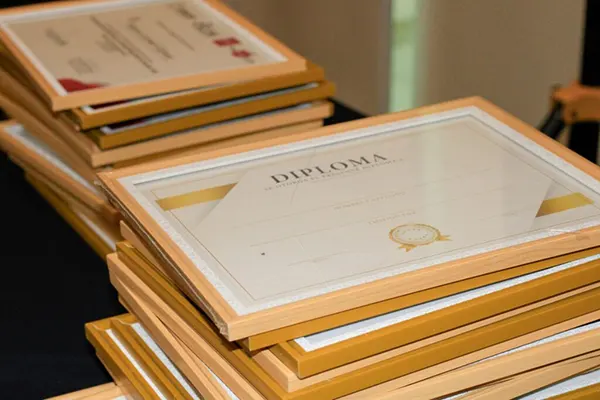
And I realized these moments do leave an impression on your memory. Even I do remember that compliment from the fourth-grade teacher and that “good game” from the coach in high school.
So, my views about awards are changing. Maybe they’re more than just decorations.
In this article, I’ll expand upon what that certificate on the wall does to us, be it our own or someone else’s. The following sections list some common effects that tangible proof of our great work has on our internal selves.
KEY TAKEAWAYS
- That certificate on the wall is more than a decoration.
- Tangible, specific proof of appreciation has more weight than spoken praises.
- A nice-looking award does infuse you with confidence.
- It also works as a motivation for others.
Spoken Praise Tends to Evaporate
People spare that “great job” easily while walking across the corridor.
Part of what a written or physical recognition does is freeze the moment. Someone had to stop, think about it, type something, print something, sign something, and hand it over. That sequence of small choices is itself the message. It says: I didn’t just feel this, I acted on it.
That’s why a certificate, even a fairly basic one, often outweighs a much warmer verbal compliment. The verbal compliment can sound generous in the moment and then drift away. The certificate sits on a shelf, a fridge, or a desk and quietly reminds the person every time they walk past it.
Confidence Isn’t Really Self-Generated
Confidence should come from inside, but does it in the real world? For most people? No right.
Actually, confidence tends to grow out of a small pile of evidence. Moments where someone did the thing, and it went okay. Moments where someone outside their own head said, yeah, that counted. The mind needs something to point at when the doubt creeps back in, and it usually does creep back in.
Recognition contributes to that pile. It doesn’t manufacture confidence out of thin air, and it can’t fix someone who’s been beaten down for years. But it gives a person a reference point. Something concrete to set against the running negative commentary most of us deal with on bad days.
I think this is especially true for people who tend to undersell themselves. The high performers who quietly assume everyone else is doing more. The kids who never quite believe they’re as smart as their grades suggest. The employees who keep waiting to be exposed as not good enough. For people like that, an outside voice naming what they did can interrupt a pretty rough internal loop.
The Specific Stuff Lands the Hardest
Generic words of appreciation have no weight. How am I extraordinary when everyone is being greeted with the same praise?
What actually moves people is recognition that sounds like it belongs to them and only them. The new teammate who slowly turned a struggling project around without making a fuss about it. The student who started the year frustrated and ended it with real momentum. The volunteer who quietly showed up every Saturday for two years. The colleague who kept the team calm during a chaotic launch.
When recognition names the actual thing, the person feels seen instead of categorized. There’s a real difference between “thanks for your hard work this year” and “thanks for staying late three nights in a row to help us hit that deadline. I noticed and I won’t forget it.” Both are nice. Only one is going to mean something a year from now.
The Middle Is Where People Really Need It
Recognition does work as motivation. But at the start of the work, motivation is anyway high. And in the end, no matter whether you won or lost, who needs motivation, and for what? It’s the middle that needs it the most.
A small acknowledgment in the slog can keep someone going for months. Not because the recognition itself is dramatic, but because it tells the person that someone is paying attention even when there’s no obvious milestone to point to.
This is something I think a lot of leaders miss. They wait for the clear-cut accomplishment before saying anything, because they want the recognition to feel earned. But by the time the accomplishment is undeniable, the person mostly just needs a victory lap. The acknowledgment they actually needed was three months earlier, when they were grinding away with no end in sight, wondering if anyone could even tell.
INTERESTING STAT
91% of employees say recognition motivates them to put in more effort.
Recognition Quietly Teaches the Whole Group What Counts
Awards aren’t just for the recipients, but also for everyone watching the ceremony.
When a school only celebrates academic top performers, every other kid in the room learns where they stand in the hierarchy. When a company only spotlights the loudest, flashiest people, the steady, dependable folks in the background start to feel invisible. When a team only honors the winning play, it tells everyone else that the discipline behind the scenes doesn’t really register.
That’s why widening the lens matters. A group that recognizes growth, kindness, consistency, and quiet leadership ends up with more of those things, because it just told everyone what’s actually valued. Recognition is one of the ways a culture talks to itself, even when nobody puts it in those words.
It’s worth being thoughtful about that, because the patterns add up over time. The things you choose to celebrate become the things people start aiming for.
Presentation Does Count, Even Though We Pretend It Doesn’t
The workmanship on the award needs to match the efforts that it is recognizing.
A certificate that looks like it was thrown together in five minutes — crooked text, weird fonts, smudged print — quietly undercuts the moment. Not because the person needs something fancy, but because the visual carelessness sends a small signal that it wasn’t really a priority. People pick up on that even when they don’t say so.
You don’t need anything elaborate. You just need it to look like someone took it seriously. If you’re putting one together yourself and you don’t want to start from a blank page, the award certificate templates at WordLayouts are a reasonable starting point — they look polished without going overboard, and you can adjust them to fit whatever the moment actually calls for. If you want to browse other editable layouts beyond certificates, WordLayouts has a broader collection too.
The Most Common Mistakes
Recognition needs to avoid some mistakes to be taken seriously.
It shouldn’t feel like a formality. People can sense when an award is being handed out because someone had to fill a slot in the agenda. The polished words don’t fool anyone. There’s a kind of hollow tone to obligatory recognition that everyone in the room can feel, including the person receiving it.
The second is timing. Recognition that lands months after the fact still has some value, but a lot of the heat has gone out of it. The closer it is to the moment that earned it, the more it actually means.
The third is only ever celebrating big wins. Big wins deserve attention, of course. But if those are the only things that get acknowledged, you end up with a culture where ordinary effort feels invisible, and people stop offering more than the minimum. The small steps along the way are often where encouragement is most needed and most useful.
And the fourth, the one I think is most common, is being too generic. Vague recognition slides off. Specific recognition sticks. If you can’t say something specific, it’s usually a sign you haven’t actually been paying close enough attention yet, and the better move is to wait until you have something real to point to.
One Last Thought
Awards can’t fix an office or a school. Deep issues require deeper fixes.
But it can do something smaller that I think we underrate. It can give someone a moment of honest pride. It can remind them that what they’ve been doing has actually been seen. It can help them stand a little straighter on the days when their own head is being unkind to them.
That’s not a small thing. That’s the kind of moment people remember twenty years later, sometimes more clearly than they remember the work itself.
This is probably the strongest argument for taking recognition more seriously than we usually do. Not because the certificate is magic, but because the act of being noticed, in a real and specific way, still does something to people that nothing else quite replaces.
FAQs
Certification validates the efforts of an individual who has met or passed the standards of competence and quality.
Yes, people still display diplomas to showcase their hard-earned credentials, establish their professional credibility, or just to mark their personal achievements.
First, select the right location, then hang the diploma using the appropriate tools.