“We shape our buildings; thereafter they shape us.” — Winston Churchill (UK Ex-PM)
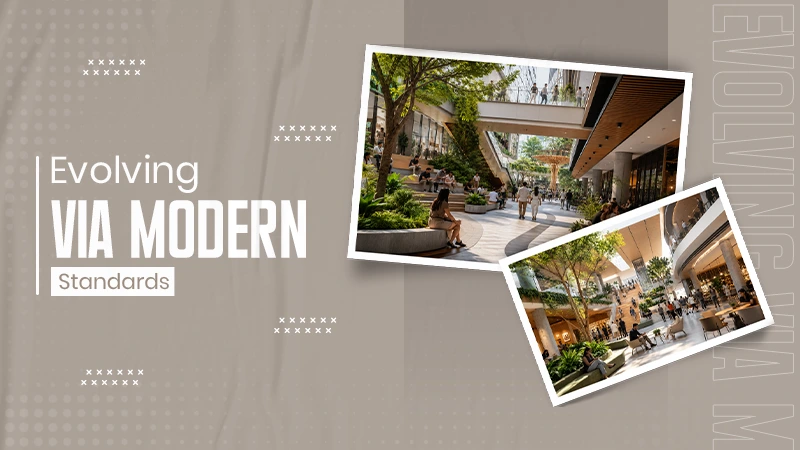
The spaces we live in and move through impact how we work, learn, travel, and interact. From office towers and universities to hospitals and transportation hubs, commercial public buildings reflect a city that constantly balances historical legacy with modern demands. They have evolved far beyond their original purpose of simply accommodating people.
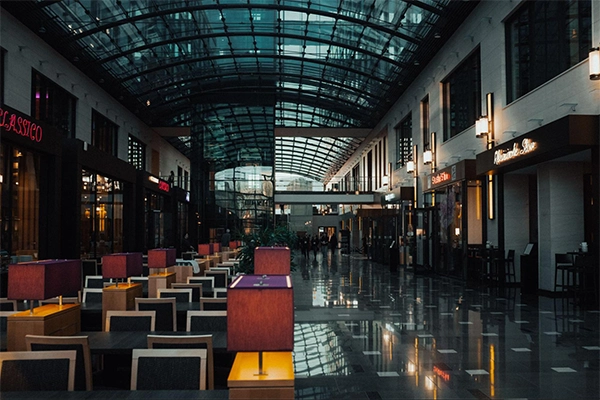
Today, modern design standards prioritize efficiency, accessibility, durability, and user experience in equal measure. As cities continue to modernize aging infrastructure while accommodating growing populations, commercial buildings are being reimagined to better serve both the people who use them and the organizations that manage them.
The result is a new generation of public environments where thoughtful planning, sustainable materials, and human-centered design work together to create spaces that remain functional, comfortable, and resilient for decades. Research also confirms that architects are now highly aware of sustainability, with 32.2% consistently integrating renewable energy systems in designs.
KEY TAKEAWAYS
- Modern commercial building design balances functionality, comfort, accessibility, and long-term efficiency.
- User experience now influences every aspect of interior planning, from layouts to material selection.
- Durable, low-maintenance materials reduce operating costs and extend building lifespans.
- Sustainable, standardized design practices help future-proof public infrastructure while improving everyday usability.
The Importance of Functional Design in High-Traffic Buildings
Modern commercial public spaces are expected to do far more than fulfill their basic function. They must support:
- Productivity
- Accessibility
- Safety
- Long-term operational efficiency
- Comfort for thousands of daily users
In office buildings, employees expect environments that support productivity. In schools and universities, students require spaces that are safe, accessible, and conducive to learning. In government buildings and public facilities, efficiency and durability are key concerns due to constant daily use.
Ongoing investment in infrastructure modernization reflects this shift. Older buildings are being renovated to meet updated standards, while new developments incorporate design strategies that prioritize long-term usability from the start.
How User Experience Shapes Interior Planning
One of the defining trends in modern commercial architecture is its emphasis on user experience. Every design decision, from circulation paths to material finishes, influences how comfortably and efficiently people interact with a building.
This includes factors such as:
- Lighting
- Acoustics
- Spatial flow
- Material selection
- Privacy considerations
Even purely functional areas are now being redesigned with comfort and usability in mind. In high-traffic environments, these decisions can significantly influence overall satisfaction and operational efficiency
Durability and Maintenance in Urban Infrastructure
Another key factor in commercial design evolution is the emphasis on durability. Public and commercial buildings experience constant use, which means materials must withstand wear over time without frequent replacement or repair.
Facility managers and architects increasingly prioritize long-term maintenance costs when selecting interior systems. This includes evaluating how materials perform under heavy use, how easily they can be cleaned, and how they hold up under environmental stress.
In many cases, the goal is not just to create visually appealing spaces, but to ensure that they remain functional and cost-effective over decades of use.
Privacy and Space Optimization in Public Environments
As expectations around comfort and usability continue to rise, privacy has become a more important consideration in commercial interior design.
Users now expect spaces that allow for both efficiency and personal comfort, even in shared environments. This has influenced how interior layouts are structured across offices, educational buildings, and public institutions.
Many buildings serve thousands of users daily, optimizing space while maintaining a sense of privacy is a critical design challenge.
Within this broader framework of modern facility planning, design choices such as restroom partitions in Chicago play a subtle but important role in balancing functionality, privacy, and efficient use of space in high-traffic commercial environments.
INTERESTING STAT
As per Research, the lack of privacy impacts acoustic dissatisfaction 25% higher than noise disturbance.
The Role of Standardization in Large-Scale Buildings
Large cities often rely on standardized design systems to ensure consistency across public facilities. Standardized design systems across large facilities:
- Simplify maintenance
- Improve operational consistency
- Make upgrades predictable
This approach is particularly useful in institutions such as schools, hospitals, and municipal buildings where reliability and efficiency are essential.
At the same time, standardization does not mean uniformity in experience. Modern design practices allow for flexibility within standardized systems, ensuring that spaces can still be adapted to specific user needs while maintaining core structural consistency.
Sustainability and Long-Term Planning
Sustainability has also become a central focus in commercial building design. In many major cities, there is increasing pressure to reduce environmental impact while improving operational efficiency.
This includes selecting materials that last longer, designing systems that reduce maintenance needs, and improving energy efficiency across entire buildings.
Sustainable design is no longer just about environmental responsibility; it is also about economic efficiency and long-term planning for public infrastructure.
How Modern Design Reflects Urban Growth
As things continue to evolve, its commercial and public spaces reflect broader trends in urban development. The integration of new technologies, updated materials, and improved design methodologies all contribute to more efficient and user-friendly environments.
These changes are not always immediately visible, but they have a significant impact on how people experience the city daily.
From office workers to students to visitors in public institutions, millions of interactions are shaped by design decisions that prioritize functionality, safety, and long-term usability.
Conclusion
Commercial public space design is also changing with city infrastructure. Public spaces are now more than functional structures.
Just finishing construction is not enough; it’s now about creating environments that are efficient, durable, and responsive to user needs. These carefully planned environments are designed to support productivity, accessibility, sustainability, and long-term operational performance.
As the city continues to modernize, these principles will play an even greater role in shaping how public and commercial spaces are built and maintained.
In this evolving landscape, even highly specific design elements such as restroom systems contribute to the overall quality and functionality of urban environments, reinforcing the importance of thoughtful planning in every aspect of commercial architecture.
FAQs
Ans: Modern standards improve safety, accessibility, efficiency, sustainability, and overall user experience while reducing long-term maintenance costs.
Ans: Architects consider factors such as lighting, acoustics, spatial flow, privacy, and accessibility to create environments that are comfortable and easy to navigate.
Ans: High-traffic facilities experience constant wear, making durable materials essential for minimizing repairs, reducing maintenance costs, and extending building lifespans.