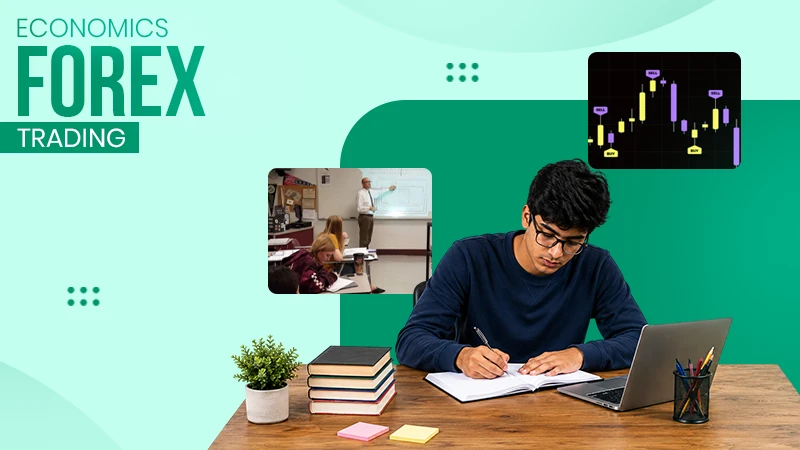
A transition from classroom economics to practical forex future execution has become crucial because while students may spend years learning economic theories, the real challenge arrives when they try to apply these concepts in real-world financial markets, where market conditions change by the second and decisions need to be backed by knowledge and practical skills.
If you’re looking to explore Forex futures trading opportunities, understanding theories is just a starting point. Understanding market stimulations, demo trading platforms, and real-time economic analysis helps students understand how trade data is interpreted, risks are managed, and trades are executed. This article shows how economics can be engaging and how to transition from theories to practical forex futures execution.
Key Takeaways
- Forex futures involve a standardized contract that allows two parties to buy or sell a specific currency at a fixed price on a future date
- Moving beyond textbook knowledge, understanding, and gaining practical exposure to forex futures allows students to put their economic theories into a real-world financial market
- Practicing trading and understanding forex in a risk-free environment helps students gain practical exposure by learning to apply economics concepts while analyzing forex futures
- As the markets continue to evolve, a practical learning experience equips students to understand market dynamics, handle risk, and adapt to changing market conditions
What is Forex Future Execution? Why is it Essential For Economics Students to Gain Practical Exposure About Forex Futures?
Forex futures execution refers to the process of placing, managing, and completing trades in the forex futures markets. It involves the buying and selling of currency on a regulated exchange.
Unlike the regular Forex market, where currencies are traded instantly, Forex futures involve a standardized contract that allows two parties to buy or sell a specific currency at a fixed price on a future date.
Why is It Important For Economics Students to Gain Practical Exposure About Forex Futures?
Moving beyond textbook knowledge, understanding, and gaining practical exposure to forex futures helps students put their economic theories into a real-world financial market. It functions as a value education and enables them to apply concepts such as inflation, interest rates, exchange rates, and central bank policies.
It enables the learners to:
- Understand how financial markets operate in real life
- Risk management and analysis
- Hands-on experience with trading and financial tools
- Building valuable careers in banking, finance, investment, and risk management
Why Classroom Knowledge Is Not Enough for Forex Future Execution
Learning economics in the classroom helps students understand major concepts, such as inflation rates, currency exchange, interest rates, and international trade. However, it does not fully prepare students for an ever-evolving financial forex market. Academic economics and finance may assume perfectly liquid markets, but real-world trading involves understanding market behaviour, managing risks, and using trading skills.
Here are some practical things that need to be understood:
1. Different Market Structures
Economic textbooks often explain how the foreign exchange market works from a theoretical perspective. However, it becomes crucial to understand how different markets operate in practice:
- Spot Forex Market: This is an over-the-counter market where trade happens directly between banks, brokers, and traders. This market is ideal for beginners as trades are settled in one or two business days.
- Forex Future Market: This market involves the exchange of currencies on a contract basis at a set price on a specified future date.
By studying both markets and analysing live demonstrations, one can gain a practical understanding of how different trading environments function.
2. Execution of Trade Orders
While classroom economics may explain how markets reach equilibrium, it rarely teaches students how orders are placed. Understanding different order types is essential:
- Limit Order: It allows traders to buy or sell only at specific prices.
- Market Order: Allows instant trading at the current market price.
- Stop-Market and Stop-Limit: It manages the risk by automatically closing or limiting a trade when the price moves against the trader.
From Theory to Trading: Effective Ways to Bridge the Gap Between Classroom Economics and Forex Futures
Economics is one such subject that cannot be retained in the brain without practical knowledge and hands-on experience in trading and finance. Hence, instead of traditional study methods, using real-world economic events, case studies, and debates can help bridge this academic gap.
1. Using Real-World Economic Events as Case Studies
Instead of bombarding students with theories that will not be remembered forever, the most effective way to make economics engaging is by connecting it to real-world economic events. Instead of telling them about inflation rates and currencies, analyzing the current inflation reports and discussing how these events can impact the forex future will make economics engaging.
- Conduct case studies on real-life financial crises or the COVID-19 impact
- Debates on economic issues
- Regular news analysis
2. Introducing Demo Trading Platforms
Practicing trading and understanding forex in a risk-free environment will help the student gain practical exposure by learning to apply economics concepts while analyzing forex futures.
- Allow students to invest in different stocks to analyse risk, supply, demand, and forecast.
- Conduct projects, presentations, and debates on price elasticity, inflation rates, and more.
3. Ensure Regular Market Observation
Financial markets evolve constantly, and hence, it becomes essential to be up-to-date with the latest economic regulations and news.
- Foster the continuous monitoring of economic news, currency movements, and market reactions.
- Conduct Seminars
- Help students connect economic theory with practical decision-making
4. Foster Risk Management and Psychology
Risk is a non-negotiable part of Forex futures markets. Rather than reading theory about what risk is, how to manage it, and more, give practical exposure by:
- Psychology Discussions, such as impulsive decisions and emotions
- Importance of Capital Preservation
- Risk Management
Wrapping Up!
To sum up, preparing the students by bridging this academic gap is essential to make them future-ready. What really helps transition from classroom economics to practical forex futures execution is demo trading, market simulations, case studies, regular market monitoring, and more.
As the markets continue to evolve, a practical learning experience equips students to understand market dynamics, handle risk, and adapt to changing market conditions.
Frequently Asked Questions (FAQs)
Ans: Practical forex education can help students to apply economic theories in the real-world financial market, understand the market behaviour, develop analytical skills, and gain hands-on experience with trading platforms and risk management.
Ans: Making the classroom economics lively and engaging through presentations, seminars, monitoring financial markets, creating a risk-free demo market for students to invest in, and discussions can help transition from classroom economics to practical forex future execution.
Ans: Forex futures execution refers to the process of buying and selling standardized currencies on a contract basis at a specific price and on a specific date.
Ans: Yes, practical forex future education is important, especially for students pursuing careers in financial analysis, economics research, banking, and more.