Students usually arrive at school carrying challenges that extend beyond academics. Family instability, mental health issues, trauma, and communication problems that go on to affect learning and overall development.
Specialized school professionals provide the assistance that students require to face complex personal, emotional, and developmental challenges. They address emotional and mental health needs, while also fixing communication barries that affect participation and learning.
This article highlights their importance and how they help students and professionals alike to recognize where their skills can create the most impact for a secure future.

Key Takeaways
- Anxiety, depression, and behavioral challenges affect many students across various communities
- School counselors provide assistance to students through academic, career, and social-emotional development
- An IEP establishes a structured approach for addressing communication needs, ensuring students receive appropriate support based on their specific challenges
- For those interested in education careers, these fields offer many opportunities. Both paths require specialized knowledge and the ability to make lasting differences
The Crisis Reality That School Support Professionals Navigate
Student mental health concerns have increased considerably in recent years. Anxiety, depression, and behavioral challenges affect many students across various communities.
Schools are usually the first place where such struggles become visible. For many students, school professionals provide the opportunity for recognition and support.
Communication challenges create another form of student crisis. Students with untreated communication disorders may experience academic difficulties, social isolation, and reduced confidence over time.
These challenges are not always obvious in classrooms. Specialized professionals identify problems that may otherwise remain hidden throughout a student’s education.
School Counselors: The Mental Health and Crisis Response Professionals
Mental health problems significantly affect how a student performs in a classroom. It is also not limited to academics but also goes on to affect many other aspects related to their life.
What School Counselors Are Trained and Authorized to Do

School counselors provide assistance to students through academic, career, and social-emotional development. Their role includes early intervention and crisis response, among many other things.
They also provide counseling support, analyse concerns, and help students navigate emotional difficulties.
Additionally, they connect families with outside resources when additional care is required.
School counselors are often the ones students approach during difficult situations. Their ability to identify warning signals prevents challenges from becoming worse.
The ASCA recommends a counselor-to-student ratio of 250 students per counselor. Many schools are forced to exceed this number due to their limited resources, thus compromising the effectiveness of the support provided by such individuals.
The Crisis Response Competencies That School Counselors Specifically Develop
School counselors receive training, allowing them to effectively respond to serious mental health problems. This includes risk assessment, safety planning, and coordinating with emergency services.
When students indicate suicidal thoughts, counselors help determine appropriate steps. They communicate with families, administrators, and mental health providers during important moments.
Counselors also help students after major crises occur. Cases of grief, hospitalization, and family emergencies usually require continued support and guidance.
This helps students return to learning successfully. Counselors create connections between students, schools, and families.
Did You Know?
Counselors also help students unlock their passions, offering information on vocational training, college programs, and job market trends.
Speech-Language Pathologists: The Communication Crisis Specialists
Communication hindrances affect a student’s potential greatly as it limits how they interact with others and whether they are able to display their capabilities to the fullest.
What SLPs Do in Educational Settings
Speech-language pathologists address communication challenges affecting student success. Their responsibilities include dealing with speech disorders, language difficulties, and social communication challenges.
SLPs provide environments that help students communicate more effectively in academic and social environments. Their services include assistance during reading, writing, classroom participation, and relationships.
Communication disorders create long-term educational problems. Students may be impacted academically or socially when their needs are not correctly identified.
Early identification and management prevent these challenges from transforming into larger barriers. SLPs help students polish skills required for lifelong communication success.
The IEP Process and Crisis Prevention Through Early Identification
The evaluation procedure identifies students requiring specialized communication assistance. SLPs assess student abilities and contribute to greater education planning.
An IEP establishes a structured approach for addressing communication needs, ensuring students receive appropriate support based on their specific challenges.
Early identification is especially important because communication problems can appear as other issues. A student may seem disengaged when the real issue involves language difficulties.
SLPs also respond to sudden communication changes. Medical events, injuries, or neurological conditions may require immediate evaluation and intervention.
These services support recovery and continued educational progress. Communication specialists help students maintain access to learning during difficult transitions.
What These Careers Have in Common
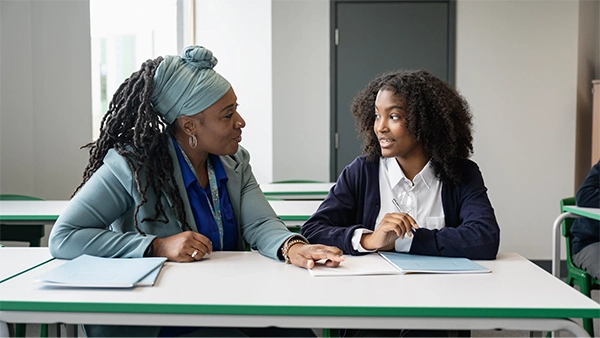
School counselors and SLPs share the responsibility of student advocacy. Both identify barriers and allow students to receive the required assistance.
Counselors advocate for emotional and mental health needs. SLPs advocate for communication services through special education processes.
Both roles require strong collaboration skills. They work with teachers, administrators, families, and other professionals.
A counselor working with a school team can respond more effectively to student concerns. An SLP collaborating with teachers helps students apply communication skills throughout the school day.
Both professions also provide meaningful career satisfaction. Professionals see direct evidence of their impact on students’ lives.
A student receiving crisis support may avoid a serious outcome. A student developing communication skills may gain confidence and independence.
Conclusion
The school professionals who make the biggest difference for students in crisis provide help beyond traditional classroom instruction. School counselors and speech-language pathologists provide specialized support that completely transforms student outcomes.
These experienced professionals locate existing challenges, create tailored solutions, and help students deal with them effectively. Their work allows more students to participate fully in education.
For those interested in education careers, these fields offer many opportunities. Both paths require specialized knowledge and the ability to make lasting differences.
FAQs
Ans: An IEP plans a structured approach for addressing communication needs, ensuring students receive appropriate support based on their specific challenges.
Ans: School counselors and SLPs share the responsibility of student advocacy. Both identify barriers and allow students to receive the required assistance.
Ans: SLPs create environments that allow students to communicate more effectively in academic and social environments. Their services include assistance during reading, writing, classroom participation, and relationships.
Ans: The ASCA recommends a counselor-to-student ratio of 250 students per counselor. But many schools tend to exceed this number because of their limited resources.